Garden bed edging: interlock, steel, plastic or a spade-cut edge, and which lasts in Ontario
Short answer
For garden bed edging in Ontario, steel lasts longest and an interlock border on a gravel base holds up well. A spade-cut edge is free but needs recutting once or twice a year. Plastic is the cheap, common choice and the hardest to keep in the ground through frost. Aim for an edge about 10 cm (4 inches) deep to hold back Kentucky bluegrass, and set interlock or stone on compacted gravel, not bare soil.
Key numbers
- Edge depth to stop lawn grass
- About 10 cm (4 in)
- Recutting a spade-cut edge
- Once or twice a year
- Stone or interlock border size
- At least 7.5 cm (3 in) thick, 10 cm (4 in) wide
- Bed soil below lawn level
- About 7.5 cm (3 in), so mulch sits flush
- Example steel strip
- 10 cm (4 in) tall, 14-gauge steel
In this guide
Garden bed edging has to stop lawn grass creeping into the bed and, in Ontario, survive frost that lifts anything shallow or loose. Steel and an interlock border on a compacted gravel base handle both. A spade-cut edge is free but needs recutting once or twice a year, and plastic is the one most likely to be sitting crooked by April.
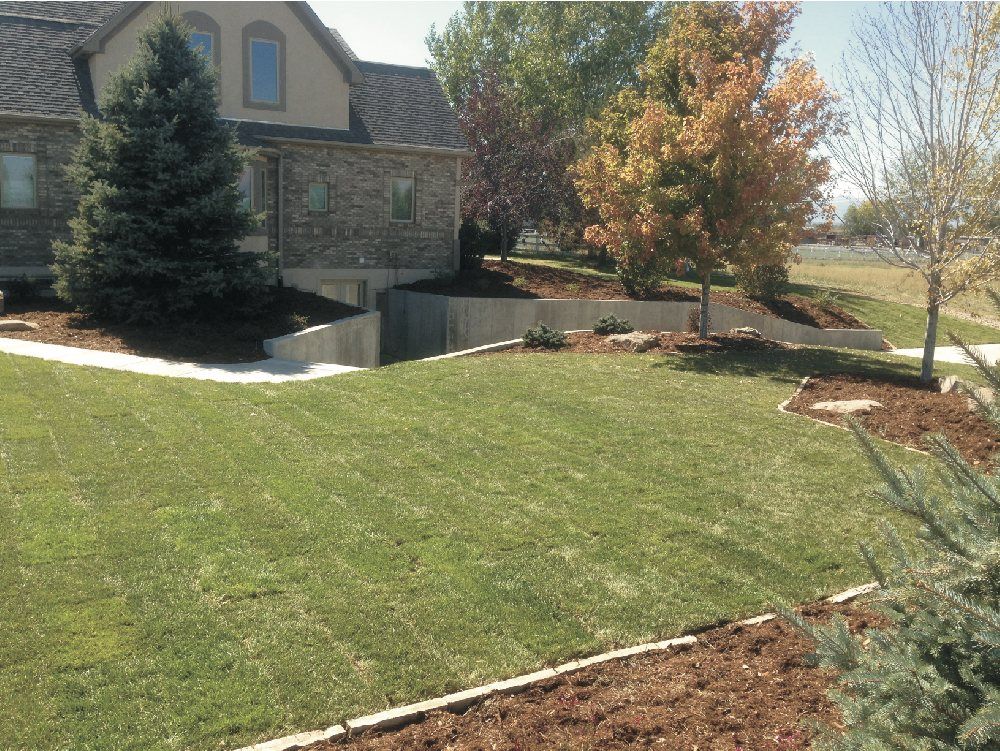
On our sod, edging and mulch project we set a curved interlock border between new sod and fresh mulch (the photo is at the end of this guide). It’s a good choice on garden bed jobs when you want a line that stays put.
Why do garden beds need an edge at all?
Because lawn grass here spreads sideways underground. Ontario nursery sod is grown mostly or entirely from Kentucky bluegrass, going by the Nursery Sod Growers Association of Ontario’s specifications.
Penn State Extension notes that Kentucky bluegrass spreads through rhizomes (underground stems) to form a dense sod. Without a barrier those stems run into soft, mulched bed soil every summer. Within a couple of seasons you can’t tell where the lawn stops.
An edge also keeps mulch in. Colorado State University Extension warns that without a defined edge, mulch spreads onto the lawn or walkway, where it becomes a mowing or trip hazard. And a clean line makes a bed look tended even when it’s due for weeding.
How do the main types of garden bed edging compare?
Steel lasts longest, a spade-cut edge costs least, and plastic gives the most trouble in frost. Here are the four common options, going by what extension services and manufacturers say about each:
Scroll sideways to see the whole table.
| Edging | How deep | Lifespan | Frost in Ontario | Upkeep |
|---|---|---|---|---|
| Spade-cut edge | About 10 cm (4 in) deep and wide (Illinois Extension) | Until it grows back in | Not an issue, nothing to lift | Recut once or twice a year (Illinois, Clemson) |
| Plastic strip | Buried with steel anchoring stakes (Illinois) | Poor durability (Illinois) | Hardest to keep in the ground (Illinois) | Re-seat and re-stake after winter |
| Steel strip | Colmet’s attached-stake strip is 10 cm (4 in) tall, 14-gauge | Metal lasts longest (Illinois) | Can still heave (Illinois); stakes need firm soil | Little; trim grass along it |
| Interlock or stone border | Set on compacted gravel; stone at least 7.5 cm (3 in) thick and 10 cm (4 in) wide (Illinois) | Long, if the base is right | Stays level on gravel, moves on bare clay | Trim along it; reset any lifted pieces |
Illinois Extension’s Rhonda Ferree sums up the trade-off well. Metal is the longest lasting but costs more and takes more work to install. Plastic is the most common homeowner choice because it’s cheap and easy, even though it holds up poorly.
Is a spade-cut edge good enough?
For many beds, yes. It’s free and it looks natural. Illinois Extension says an edge about 4 inches (10 cm) deep and wide can easily contain bluegrass.
The catch is that it needs recutting: once or twice a year according to Illinois, and seasonally according to Clemson’s Home and Garden Information Center.
To cut one:
- Mark the line with a hose or rope and stand back to check the curves look right from the house.
- Push a sharp flat spade or half-moon edger straight down along the line, about 10 cm deep.
- Angle the spade in from the bed side and lift out the wedge of grass and soil, leaving a small vertical cliff on the lawn side.
- Shake the soil off the grass and compost or discard the sod pieces.
- Pull back the bed soil slightly so the mulch sits at or just below lawn level.
That last step matters. Colorado State Extension suggests dropping the bed soil about 7.5 cm (3 in) so the top of the mulch ends up level with the surrounding grade, or tapering the soil at the edge. Just make sure the bed doesn’t turn into a puddle that collects water from the yard.
Watch out
Don’t cut edges in soaked spring soil. Wet soil smears instead of slicing, and the edge slumps back in. Wait until a handful crumbles instead of holding together.
Why does plastic edging pop out of the ground?
Frost pushes it up. Pavement Interactive’s frost action reference explains that water in fine-grained soil freezes into ice lenses. Those lenses draw in more water and lift whatever sits above them.
A thin plastic strip with a few short stakes has very little holding it down, so a freeze can nudge it up and it may not settle back. Low, wet spots are the worst.
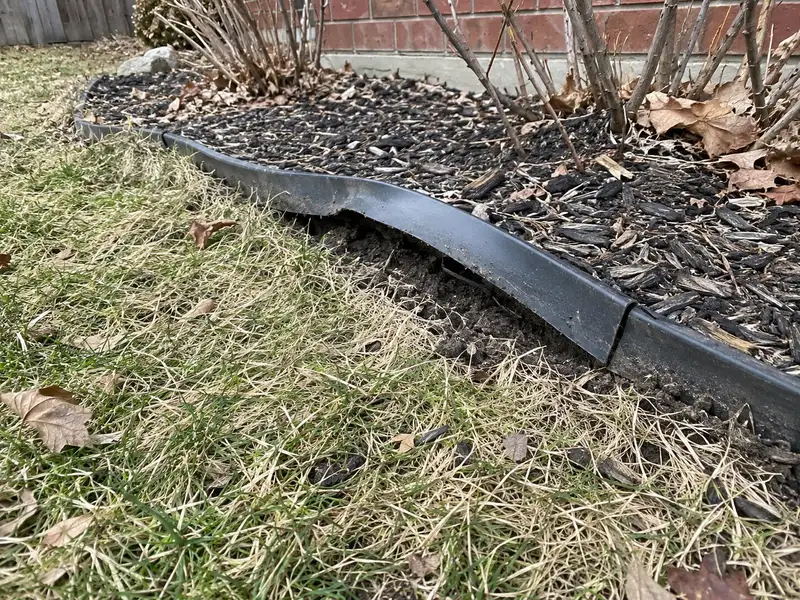
Illinois Extension calls plastic probably the hardest edging to install so it lasts. Its fixes:
- Choose a round-top style, which doesn’t sink as easily as a flat strip.
- Or choose a grooved or lip style, which it says stops most frost heaving.
- Use steel anchoring stakes and take care with the install.
- For flat strips, nail a 1 x 1 inch strip of treated wood along the bottom with galvanized nails.
If you go with plastic, bury most of the height, stake it closely, and expect to tap a few sections back down each spring.
Is steel edging worth the cost?
If you want a thin, permanent line, usually yes. Illinois Extension rates metal as the longest-lasting edging and says it’s strong enough for places like driveway edges.
Colmet’s attached-stake edging, as one example, is a 10 cm (4 inch) tall strip of 14-gauge steel. It comes in 4, 8 and 10 ft lengths, with the stakes already attached.
It costs more per metre than plastic and it’s harder to put in, especially in stony soil. Illinois notes that steel can have frost-heaving problems too, so make sure the stakes go well into firm soil below the strip.
How much steel edging do you need?
Take a bed along the front of a house that’s 6 m long and 1.5 m deep. It needs edging on three sides, because the house wall is the fourth:
Scroll sideways to see the whole table.
| Side | Length |
|---|---|
| Front of the bed | 6 m |
| Two ends | 2 x 1.5 m = 3 m |
| Total | About 9 m (30 ft) |
Four 8 ft steel sections give you 32 ft, which is tight once the joins overlap, so five is safer.
Good to know
Measure curves with a garden hose laid on the ground, then straighten it and measure the hose. A tape measure across a curve always comes up short. Allow a bit extra for joins and cuts.
How do you stop an interlock border from heaving?
Set it on compacted gravel, not on the soil. In our project photo the border pieces sit low, close to lawn level.
Clemson says pavers or brick laid flush with the lawn make an attractive edge, and that low, flat edging lets a mower ride over it. But a row of stones dropped into a trench of soil can rise and tip with the frost, the same way pavers on a poor base do.
Paver manufacturers give the numbers for this, though for walkways rather than borders:
- Unilock calls for a minimum of 8 inches (20 cm) of gravel base for pedestrian areas on clay soil, because clay drains poorly and needs a frost-resistant layer.
- Techo-Bloc’s edge restraint instructions say to mount restraints directly on the compacted base, with the base extending past the edge so the spikes have something to grab.
Neither gives a separate figure for a lawn border, which carries far less weight than a walkway. Frost lifts a light border just as easily, so the base still matters. Our guide on what goes under interlock explains the layers in more detail.
Gravel works because it drains. Pavement Interactive notes that clean sands and gravels with few fine particles aren’t frost-susceptible, while soils with a lot of fine particles are.
Stone edging should also be big enough to do the job. Illinois says at least 7.5 cm (3 in) thick and 10 cm (4 in) wide to block grass.
What are the common edging mistakes?
Edges usually fail for one of these reasons:
- The edge is too shallow, so grass runs straight under it. Aim for about 10 cm.
- Plastic laid on the surface or barely buried, with stakes only at the ends.
- Stone or interlock set in soil with no gravel base, so it heaves and tips after one winter.
- The edging sits too high above the lawn and the mower catches it.
- Mulch heaped above the edge, so it spills over every time it rains.
- Tight, wiggly curves that look fussy and are hard to mow around. Long, gentle curves are easier to live with.
When is it worth having it done for you?
A cut edge or a short run of plastic is a reasonable weekend job. It’s worth calling someone when the edging is long, or when you want interlock or stone (the base work is the heavy part).
The same goes when the bed itself needs weeding, reshaping and mulching at the same time. That’s the job we do as part of garden beds, planting and mulching across Markham, Richmond Hill and nearby.
If the bed needs more than an edge, our guide to low-maintenance garden beds covers planting and weeds. The mulch guide shows how much mulch to order once the edge is in. Edges are also a natural part of a spring cleanup.
Text a photo of your beds to (437) 684-2535 and we’ll arrange a visit and a free quote.
Other questions people ask
What is the best edging for a garden bed?
For a bed next to a lawn in Ontario, steel or a stone or interlock border set level with the grass. Illinois Extension calls metal the longest-lasting edging, and Clemson's Home and Garden Information Center says pavers or brick laid flush with the lawn make an attractive edge you can mow over. Both need to go deep enough to stop the creeping stems of the grass, about 10 cm, and stone needs a gravel base to stay put through winter.
What is the cheapest way to edge your garden?
A spade-cut edge. You cut a clean vertical line along the bed with a sharp spade or half-moon edger and lift out the grass and soil on the bed side. Illinois Extension says an edge about 4 inches deep and wide can easily contain Kentucky bluegrass. The only cost is your time: Illinois says it needs touching up once or twice a year, and Clemson says to recut it seasonally.
What do professional landscapers use for edging?
It depends on the yard and the budget. A cut edge is common on bed refreshes, and steel or a stone or interlock border goes in where the owner wants a permanent line. On our sod, edging and mulch job we set a curved interlock border between the new sod and the beds. Cheap plastic edging is the one to be wary of, because it's the hardest type to keep in the ground.
Does plastic edging heave in winter?
Often, yes. Illinois Extension says plastic is probably the hardest edging to install so it stays put, and that many people have had plastic edging that simply won't stay in the ground. Its advice is to pick a round-top or lip-style edging, anchor it with steel stakes, and install it carefully. Low, wet spots are the worst, because frost heave needs water in the soil to build ice.
When should you edge garden beds in Ontario?
Any time the ground isn't frozen, but spring and fall are easiest. A spring cleanup is the natural time to recut edges that blurred over winter, and a quick touch-up in late summer keeps them sharp. Illinois Extension suggests fall as a good time to put in a new edge. Avoid soaked spring soil, which smears instead of cutting cleanly.
Sources
- Illinois Extension (Rhonda Ferree): Bed edges (2015)
- Clemson Home and Garden Information Center: Low-maintenance landscape ideas
- Colorado State University Extension: Mulching
- Penn State Extension: Kentucky bluegrass
- Nursery Sod Growers Association of Ontario: Turfgrass technical specifications
- Pavement Interactive: Frost action
- Unilock: How much base is required for paving stone installation
- Techo-Bloc: Installation of an edge restraint
- Colmet: Attached-stake steel edging specifications (Sweets)
Related guides and service
- Lowest-maintenance landscaping: garden beds for GTA yards The lowest-maintenance landscaping for most yards in Markham and the GTA is a planted bed that covers its own soil.
- How much mulch do you need? A calculator, the right depth and when to mulch For most Ontario garden beds, spread mulch 2–3 inches (5–7.5 cm) deep, and no more than 4 inches.
- What goes under interlock: paver base depth, gravel and bedding sand for GTA driveways and patios A paver base in the GTA is compacted crushed gravel, with about 1 inch of bedding sand and then the pavers on top.
- Spring cleanup checklist for Ontario yards Do a spring yard cleanup in Ontario in two rounds. Once the snow is gone and the ground is firm, usually in April in the GTA, pick up branches, sweep hard surfaces, rake the lawn lightly and prune shrubs.