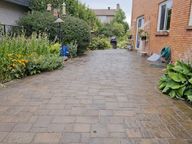
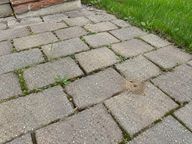
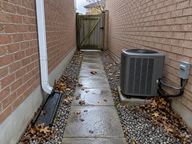
How much does an interlock driveway cost in the GTA?
Short answer
HomeStars' Toronto price guide (updated August 2026) puts a new interlock driveway at about $8,000 to $20,000 or more. Its Barrie guide lists $10 to $18 per square foot installed. A big share of that is labour and the base underneath: Unilock says driveways generally need 14 to 16 inches of base. Size, removing the old surface, soil, access, pattern and city permits move the final number.
Key numbers
- Reported driveway total, Toronto
- $8,000–$20,000+
- Reported installed rate, Barrie
- $10–$18 per sq ft
- Base depth for a driveway
- 14–16 in
- Typical lifespan
- 30 years or more
- Utility locate notice
- At least 5 business days
In this guide
The typical interlock driveway cost in the Toronto area is $8,000 to $20,000 or more, according to HomeStars’ 2026 Toronto price guide. Per square foot, HomeStars’ Barrie guide puts installed interlock at $10 to $18, roughly three times its asphalt rate of $3 to $6.
Where your quote lands in that range has less to do with the pavers you pick than with the digging, the base, the old surface that has to come out and how easy your site is to work on.
These are published survey figures, not our prices. We give free quotes after a visit to the property. If you’re planning a new driveway, walkway or patio, our interlock installation page explains how we build one.
What does an interlock driveway cost in Toronto and the GTA?
Published price guides put a typical interlock driveway in Toronto at $8,000 to $20,000 or more, well above asphalt or concrete. All the figures below come from HomeStars, the Canadian home-services review site, which publishes city price guides (the Barrie one says it draws on insights from verified homeowners).
Its August 2026 guides are the most current reputable numbers we could find for the GTA and nearby Ontario.
Scroll sideways to see the whole table.
| Surface | Toronto driveway | Per sq ft, Barrie | 800 sq ft, Barrie |
|---|---|---|---|
| Asphalt | $2,500–$6,000+ | $3–$6 | $2,400–$4,800 |
| Concrete | $4,000–$10,000+ | $7–$12 | $5,600–$9,600 |
| Interlock (paving stone) | $8,000–$20,000+ | $10–$18 | $8,000–$14,400 |
| Brick pavers | not listed | $12–$20 | $9,600–$16,000 |
HomeStars’ Toronto landscaping guide adds that the interlocking paver material alone runs about $5 to $7 or more per square foot. So the stone is only part of an installed price.
The rest is excavation, base gravel, sand, edging, equipment, disposal and labour.
Barrie isn’t in the GTA, but it’s the closest guide HomeStars publishes with per-square-foot interlock rates, so treat those rates as a rough guide here. The Toronto totals in the first column run higher at the top end.
Interlock vs concrete vs asphalt: which costs more, and which lasts longer?
Interlock costs the most up front, as the table above shows, and lasts the longest. HomeStars’ Barrie paving guide, updated August 2026, gives these lifespans for a driveway:
Scroll sideways to see the whole table.
| Driveway surface | Typical lifespan | Upkeep the guide mentions |
|---|---|---|
| Asphalt | 15–20 years | Resealing every 2–3 years |
| Concrete | 25–30 years | None listed |
| Interlock | 30 years or more | None listed |
Spread over its life, interlock’s higher price looks less lopsided, and asphalt’s resealing adds to its running cost. Interlock also repairs more easily, which comes up at the end of this section.
Why interlock costs more to install
Every paver is placed by hand on a deep, carefully compacted base. Unilock’s contractor guide says patios and walkways usually need about 10 to 12 inches of base, while driveways, which carry cars, generally need 14 to 16 inches.
That means a lot of digging. Here is one worked example from Unilock’s driveway installation guide:
- Paver: 2¾ inches
- Bedding sand: 1 inch
- Base gravel: 12 inches
- Total excavation: 15¾ inches (39.5 cm)
That example uses a reinforcing grid layered into the gravel (Unilock’s DriveGrid), which the guide says cuts the base depth needed. The gravel goes in 3 to 4 inches at a time, and each layer gets at least three passes with a reversible plate compactor.
The soil that comes out usually has to be hauled away, and the gravel has to be brought in. Both show up on the bill.
Why repairability matters
If a section sinks, the pavers can be lifted, the base fixed and the same stones relaid, with a new paver swapped in for any that cracked. Our guide on why interlock sinks and how to fix it explains how that works.
What makes one interlock quote higher than another?
Two quotes for the same driveway can be thousands of dollars apart because they aren’t pricing the same work. These are the things that move the number most:
- A bigger area costs more in total, but often a little less per square foot.
- Breaking up an old asphalt or concrete driveway and hauling it away is extra work, and HomeStars lists it as a common hidden cost.
- Clay-heavy or uneven ground can need extra excavation or a thicker base. HomeStars’ Barrie guide says that adds $1.50 to $4 per square foot.
- HomeStars puts grading and levelling in Toronto at $500 to $3,000, and excavation and soil removal at $1,500 to $5,000.
- A front driveway a truck can back onto is easier than a backyard patio where everything goes through a side gate by wheelbarrow.
- Curves, borders, inlays and herringbone patterns mean more cuts and more time.
- Steps, retaining walls, lighting or sealing add to the bill.
- A permit may be needed if the work touches the curb or city boulevard (see below).
Good to know
When you compare quotes, ask each contractor the same four things:
- How deep is the base, and what material is it?
- How do you compact it, and in what lift thickness?
- What edge restraint do you use?
- Are removal and disposal of the old surface included?
A much cheaper quote can mean a thinner base. Our guide to paver base depth and materials lists the published numbers to check the answers against.
What does that look like for a real driveway?
Here is the arithmetic using HomeStars’ Barrie rates. It’s a planning tool for checking whether a quote is in a sensible range, not a price from us.
Scroll sideways to see the whole table.
| Project | Area | At $10–$18 per sq ft | Clay-soil prep, $1.50–$4 per sq ft |
|---|---|---|---|
| Front walkway, 4 ft × 30 ft | 120 sq ft | $1,200–$2,160 | $180–$480 |
| Single-car driveway, 12 ft × 35 ft | 420 sq ft | $4,200–$7,560 | $630–$1,680 |
| Double driveway, 20 ft × 40 ft | 800 sq ft | $8,000–$14,400 | $1,200–$3,200 |
Small jobs don’t scale down neatly. A walkway still needs equipment delivered and a crew on site, so don’t be surprised if its per-square-foot price comes in above a driveway’s.
Do you need a permit for an interlock driveway?
Often you do, if the work reaches the curb or city land.
Markham
In Markham, the City says you need a permit to widen a curb cut or create a new one, and By-law 158-93 sets the size of changes you can make. The fee covers a site inspection.
Toronto, Scarborough and North York
In Toronto, including Scarborough and North York, a street work permit from Transportation Services is needed before building, rebuilding or repaving any driveway or walkway that crosses City property such as the boulevard, sidewalk or curb. The City also says:
- For new driveway or walkway construction, apply at least eight weeks before work starts.
- An application for a new, widened or relocated driveway has to include a contractor licensed by the City to do driveway paving.
- Starting without a permit can mean fines.
Utility locates everywhere in Ontario
Every dig in Ontario also needs a utility locate first. Ontario Dig Authority (formerly Ontario One Call) says public locates are free and should be requested at least five business days before digging at a single address.
Watch out
The person doing the digging should submit the locate request, so if you hire someone, check they’ve done it. Private lines, like a buried cable to a garden light or shed, aren’t covered by the free public locate and need a separate private locate.
When is the best time to install interlock in Ontario?
Spring and fall are usually the best times. HomeStars’ Toronto guide says spring and fall are generally best for paving and that booking outside the busy spring and summer months can sometimes save money. Its Barrie guide puts the paving season at May to October.
The joint sand matters too. Alliance Gator says its polymeric sand should go onto completely dry pavers at above 0°C, and that below that it may never set properly, so a late-November install is a gamble.
Our polymeric sand guide covers the weather rules.
Which installation mistakes cost more later?
The expensive ones are underneath, where you can’t see them once the pavers are down.
- A base that’s too thin for cars, or a patio-depth base under a driveway.
- Gravel dumped in one deep layer instead of compacted in thin lifts, so it settles under the first heavy load.
- No proper edge restraint, so the outer rows creep and the joints open.
- A slope that sends water toward the house instead of away from it.
- Skipping the permit or the locate, which can mean fines, rework or a damaged utility line.
- Comparing quotes on price alone without checking what’s in them.
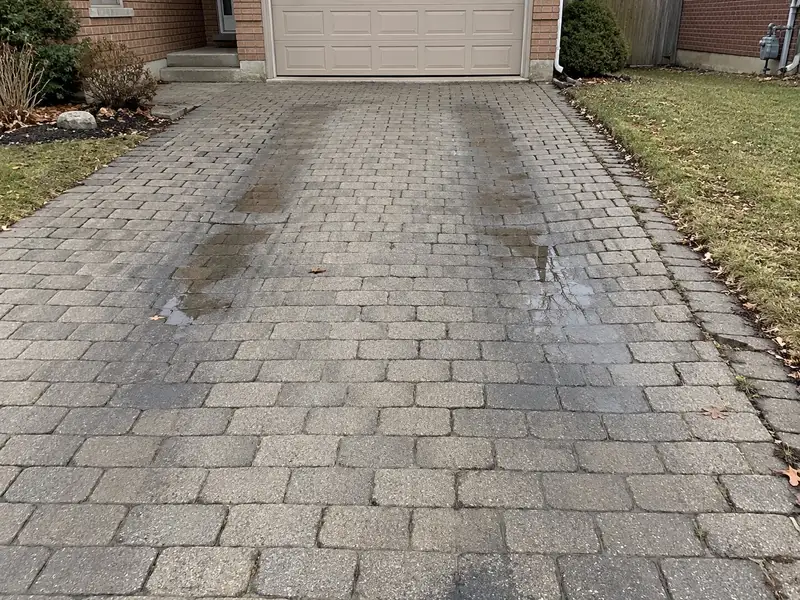
Sealing is optional and can be added later. Our guide on whether to seal your interlock goes through the pros and cons.
Is repairing old interlock cheaper than replacing it?
Usually, if the base underneath is still sound. Interlock repair cost comes down mostly to how much area has to be lifted and whether the base needs rebuilding.
The bedding can be corrected and the same pavers relaid, so a sunken section or a few cracked stones rarely means a whole new driveway.
If most of the surface has sunk, heaved or spread, the base has failed and replacement starts to make more sense. Our interlock repair page covers lifting and levelling, and for general yard budgets see what landscaping costs in Markham.
Can you install interlock yourself to save money?
For a small garden path or a little patio, yes, if you’re willing to rent a plate compactor and haul a lot of gravel.
A driveway is different. It carries cars, so it needs the deepest base, and it often needs a permit and a locate before anyone digs. Mistakes are expensive to undo because the whole surface has to come up.
If you’d like a price for your own driveway, walkway or patio, call or text (437) 684-2535. We’ll come out, have a look and give you a free quote. You can read more about how we build it on our interlock installation page.
Other questions people ask
Is interlocking expensive?
Compared with the other common driveway surfaces, yes. HomeStars' 2026 Toronto guide lists asphalt driveways at $2,500 to $6,000 or more, concrete at $4,000 to $10,000 or more, and interlocking pavers at $8,000 to $20,000 or more. HomeStars' Toronto landscaping guide puts the pavers alone at about $5 to $7 or more per square foot, so the rest of an installed price is labour, excavation and base. What you get back is a surface where single pavers can be lifted and reset instead of patched.
Is it cheaper to asphalt or concrete a driveway?
Asphalt is usually cheaper up front. HomeStars' Barrie guide lists asphalt at $3 to $6 per square foot and concrete at $7 to $12, against $10 to $18 for interlock. The same guide notes that asphalt needs resealing every 2 to 3 years and lasts about 15 to 20 years, so the running cost is higher than the first bill suggests.
What is the typical cost of paving a driveway in Ontario?
HomeStars says Toronto homeowners generally pay around $5,000 for driveway paving overall, and that the price moves with size, material and whether it's a new driveway or a replacement. For interlock specifically, its Toronto guide gives $8,000 to $20,000 or more, and its Barrie guide estimates $8,000 to $14,400 for an 800 sq ft interlock driveway. These are survey ranges, so expect real quotes to vary with your site.
How much for 1000 square feet of pavers?
Using HomeStars' Barrie rate of $10 to $18 per square foot installed, 1,000 sq ft works out to roughly $10,000 to $18,000 before extras. Clay soil, a lot of excavation, removing an old driveway, steps, borders or drainage work can add to that. Treat it as a rough check on a quote, not as a price.
How long does an interlock driveway last?
HomeStars' Barrie guide describes interlock as long-lasting, at 30 years or more, compared with 15 to 20 years for asphalt and 25 to 30 for concrete. In practice the base decides it. A driveway built on a thin or badly compacted base can settle and rut in the wheel tracks, no matter how good the pavers are.
Sources
- HomeStars: How much does paving a driveway in Toronto cost? (updated August 2026)
- HomeStars: Paving contractors cost guide, Barrie (updated August 2026)
- HomeStars: A guide to landscaping costs in Toronto (updated August 2026)
- Unilock Contractors: What is paver base and how much you need
- Unilock Contractors: How to build a paver driveway
- City of Toronto: Construction permit (driveways and walkways on City property)
- City of Markham: Curb modification application
- Alliance Gator: Gator jointing material FAQ
- Ontario Dig Authority (formerly Ontario One Call): Public utility locates for homeowners
Related guides and service
- What goes under interlock: paver base depth, gravel and bedding sand for GTA driveways and patios A paver base in the GTA is compacted crushed gravel, with about 1 inch of bedding sand and then the pavers on top.
- Sunken interlock: why pavers sink and how to fix them Interlock sinks when the layer under it settles: a base that was too thin or poorly compacted, water soaking in from a downspout, or soft soil.
- Polymeric sand: what it is, when to replace it, and what affects the cost Polymeric sand is joint sand mixed with a binder that hardens as it dries, locking interlock pavers together and resisting weeds, ants and washout.
- Landscaping costs in Markham: what landscapers charge per hour in Ontario Landscape Ontario's 2022 charge-out rate survey puts landscape labourers at $55 to $90 an hour and landscape technicians at $75 to $110.