Should you seal your interlock? When and how often in Ontario
Short answer
Interlock sealing is optional. Unilock says its pavers don't need it, but a sealer brings back colour, makes stains easier to clean and can harden joint sand. In Ontario, wait 60 to 90 days after new pavers go in, seal on dry pavers between about 10 °C and 30 °C with 24 to 48 dry hours ahead, and reseal every 3 to 5 years. Around the GTA, that means late May to mid-September.
Key numbers
- Wait after new pavers go in
- 60 to 90 days
- Air temperature to seal
- About 10–30 °C
- Dry weather around the job
- 24–48 h
- How often to reseal
- Every 3–5 years
- Best window in the GTA
- Late May to mid-September
In this guide
Interlock sealing is optional for most driveways and patios in Ontario. Paver maker Unilock says its concrete pavers don’t require regular sealing. People seal because they like the result: deeper colour and stains that wipe off instead of soaking in.
If you do seal, the rules are strict. Let new pavers cure, seal only clean and dry stone, wait for a warm, dry stretch of days, and redo it every few years.
Sealing only ever comes after a proper cleaning, which is the bigger part of our interlock cleaning and sealing work. Below is what the paver and sealer makers say about timing and upkeep.
What does sealing actually do?
Most sealers sold for concrete pavers are clear acrylics. They soak into the surface of the pavers and leave a thin film on top.
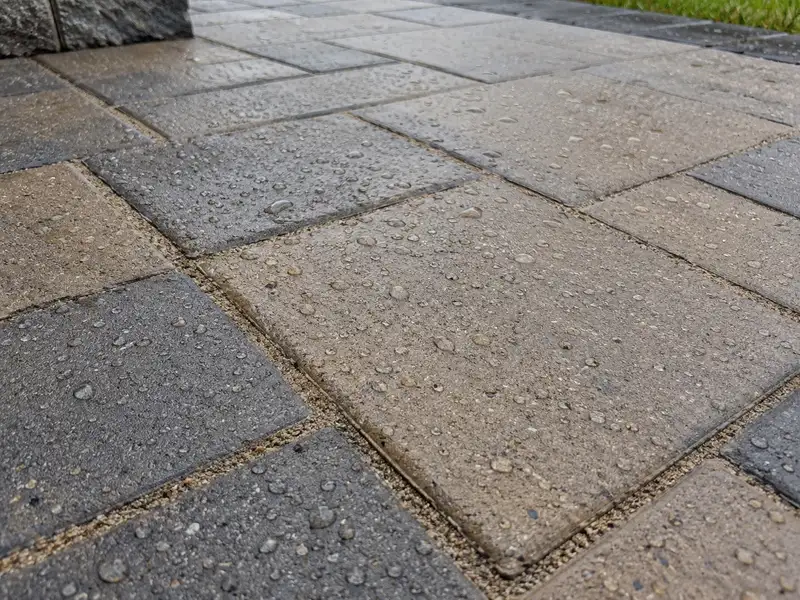
Techniseal’s data sheet for its satin sealer says the film keeps contaminants from soaking in and helps protect against de-icing salt. Alliance Gator lists oil, grease, salt and UV among the things its hybrid sealer helps resist.
What you notice day to day:
- The colour looks deeper, close to how the pavers look when they’re wet. A “wet look” sealer adds gloss; a satin or matte one stays closer to the natural colour.
- Oil drips, leaves and spilled drinks are easier to clean before they stain.
- Water-based sealers, and the products sold as “joint stabilizers”, bind the top of the joint sand so it washes out less.
It won’t fix sunken pavers or keep weeds out of joints that are already empty. Those need repair and new joint sand first.
Is interlock sealing worth it, or a waste of money?
It’s worth it if you want the look or easier stain cleanup, and a waste if you don’t. For a lot of homes it comes down to taste. It tends to pay off when:
- You have a light-coloured driveway that shows every oil and tire mark.
- The pavers have faded and you want the colour back after a cleaning.
- The joints keep washing out and you’ve just had them re-sanded.
It’s usually not worth it when the pavers are new and still showing white efflorescence, when the surface needs repairs, or when you’d be unhappy with a darker or shinier look.
Techniseal also warns that its sealer makes the surface more slippery when wet. That matters on steps and sloped walkways.
When should new interlock be sealed?
Wait at least 60 to 90 days after installation. That’s Unilock’s guidance, and Alliance Gator says most paver manufacturers recommend sealing 60 days after the install date.
The wait gives the pavers time to dry out and lets efflorescence (the white, powdery salt that comes out of new concrete) appear and fade. Unilock says that can take two to three months, or up to a year. Seal over it and you lock the haze under the film.
Freshly re-sanded joints also need time, and the wait depends on the product:
Scroll sideways to see the whole table.
| Source | Wait after new joint sand |
|---|---|
| Unilock | 24 hours of drying |
| Alliance Gator | At least 48 hours above 16 °C with no rain |
| Techniseal Satin Look (EV) | 30 days after polymeric sand |
Follow the label on the sealer you’re actually using. Our polymeric sand guide covers the sand side of the job.
What weather do you need to seal pavers?
You need dry pavers, air around 10–30 °C for most products, and no rain in the forecast. Three sources compare:
Scroll sideways to see the whole table.
| Rule | Unilock (general guidance) | Techniseal Satin Look (EV) | Alliance Gator Hybrid Seal Low Gloss |
|---|---|---|---|
| Temperature | 10–32 °C (50–90 °F) | 10–30 °C during and for 24 h after | 5–29 °C when applied |
| Dry weather | Clear skies 24–48 h before, up to 48 h dry after | No rain for 24 h | No rain for 24 h |
| Before foot or car traffic | 24 h to dry, up to 48 h to cure | Foot 24 h, cars 48–72 h | Rain-safe after 24 h |
| Reseal | Every 3–5 years | When worn, 2 years minimum | Not stated |
| Coverage per gallon (3.78 L) | 100–150 sq ft water-based, 80–120 solvent | Up to 150 sq ft as a sealer, 50–125 as a joint stabilizer | About 100–225 sq ft |
Good to know
The products don’t agree on every detail. Alliance Gator wants the paver surface cool to the touch, while Techniseal asks for it to be warm. The label on your can beats any general rule.
When is the best time to seal interlock in Ontario?
Late May to mid-September for most of the GTA. Environment Canada’s 1981–2010 climate normals for Toronto Buttonville, the weather station at the former Buttonville airport in Markham, show why:
Scroll sideways to see the whole table.
| Month | Average daily high | Average daily low | Days above 30 °C |
|---|---|---|---|
| April | 12.1 °C | 1.2 °C | 0.1 |
| May | 19.1 °C | 6.8 °C | 0.8 |
| June | 24.6 °C | 12.6 °C | 4.0 |
| July | 27.1 °C | 15.2 °C | 7.0 |
| August | 26.0 °C | 14.3 °C | 4.3 |
| September | 21.5 °C | 9.9 °C | 0.8 |
| October | 14.1 °C | 3.6 °C | 0.0 |
April and October nights regularly drop well under 10 °C. That rules out products that need 10 °C for the full 24 hours.
In July the problem flips. There are about a week’s worth of days over 30 °C. June and the first half of September are the easiest stretches.
Watch out
Unilock warns that sealing hot pavers risks staining and peeling. In midsummer, seal in the morning, once the dew is gone and before the stone heats up.
How often should you reseal interlock?
Every three to five years, according to Unilock, and sooner on busy driveways or in snowbelt winters. In the GTA, a driveway that takes daily car traffic, snow-shovelling and road salt will wear faster than a backyard patio.
Don’t go by the calendar alone. Techniseal’s sheet gives a simple test:
- Sprinkle a few drops of water across the surface.
- If the water soaks in, the pavers are bare and ready for a new coat.
- If it beads up, the old sealer is still working. Techniseal says not to apply more, since too much product can turn the surface whitish.
If you don’t know what sealer was used before, Techniseal and Alliance Gator both say to remove the unknown coating with a stripper first. Unilock says to test whether old and new sealers are compatible before resealing.
How is interlock sealed?
The sealing itself is the short part. The prep is most of the job:
- Pull weeds, then clean the pavers and treat stains. Our guide on how to clean interlock covers this, and pressure washing without damage covers the washer settings.
- Reset any sunken pavers and replace washed-out joint sand.
- Remove efflorescence or polymeric sand haze. Techniseal says not to seal over a blotchy or hazed surface. See how to remove polymeric sand haze.
- Let everything dry. Unilock says at least 24 hours after cleaning.
- Test the sealer on a hidden patch of about 4 sq ft (0.4 m²), as both Techniseal and Alliance Gator ask.
- Spray one even coat in small sections (Techniseal says no more than 50 sq ft at a time), then roll off the excess before it dries.
- Keep a wet edge and finish in one session, so overlaps don’t leave shiny patches.
- Keep people, cars and sprinklers off it for the full curing time.
What are the common interlock sealing mistakes?
Most of them come from rushing the prep or the weather:
- Sealing new pavers before the efflorescence has gone, which traps the white haze under the film.
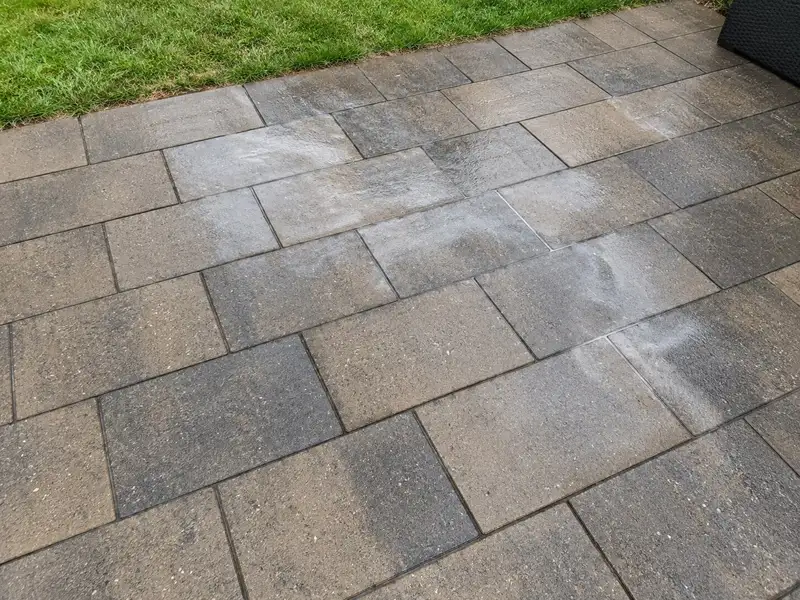
- Sealing pavers that are still damp from washing or overnight dew. All three sources ask for a dry surface, and Unilock warns that water trapped under the sealer can leave white marks.
- Leaving puddles of sealer on the surface. Techniseal and Unilock both say excess product can turn white or leave streaks.
- Putting a new coat on top of a sealer that hasn’t worn off yet.
- Choosing a high-gloss product for steps or a sloped walkway, then finding it slippery in the rain.
- Overspray on the house, garage door or car. Unilock notes it can’t be washed off afterwards.
How much does interlock sealing cost?
We couldn’t find a reliable published price survey for interlock sealing in Ontario, so we won’t quote a number.
The biggest factor is everything that happens before the sealer goes on: cleaning, stain treatment, new joint sand and any repairs. Stripping an old, unknown sealer adds more work.
The product matters too. For materials, one coat on a 500 sq ft driveway takes about 3.5 to 5 gallons of water-based sealer at Unilock’s 100–150 sq ft per gallon, and more if you’re also stabilizing wide joints.
Unilock’s article lists sealers at $80 to $150 a gallon without saying which currency, so check current local prices before you buy.
Can you seal interlock yourself?
Yes, on a small patio, if you’re patient with the cleaning and wait for the right weather. Most DIY problems come from rushing, usually damp pavers or too much product.
A large driveway is harder, because it has to be done in one go and then kept clear for two or three days.
If you’d rather hand it off, our interlock cleaning and sealing service covers the cleaning and re-sanding, and we’ll tell you whether sealing makes sense for your surface. We work across Markham and nearby, including Richmond Hill and Stouffville.
Call or text (437) 684-2535 with a couple of photos and we’ll come and give you a free quote.
Other questions people ask
Should you seal your interlock driveway?
You don't have to. Unilock says its concrete pavers don't need regular sealing. Sealing makes sense if you want the colour richer, want oil and salt stains to wipe off more easily, or want to help hold the joint sand in place. If your clean driveway already looks the way you like, you can skip it.
How often should interlock be resealed?
Unilock suggests every three to five years, and sooner on busy driveways or in snowbelt climates. Techniseal says to wait until the old coat has worn off, and at least two years, before adding another. Sprinkle some water on the pavers: if it soaks in and darkens them quickly, the sealer is worn.
How much does it cost to seal interlock?
We couldn't find a reliable published price survey for interlock sealing in Ontario, so we won't quote one. The price depends mostly on the area, how much cleaning and re-sanding comes first, the condition of any old sealer, and the product. For a sense of scale, a 500 sq ft driveway takes about 3.5 to 5 gallons of water-based sealer for one coat at the coverage rates Unilock publishes.
What kind of sealer is used on interlock?
An acrylic paver sealer made for concrete pavers, either water-based or solvent-based. Unilock recommends water-based where possible: it's low odour, the sprayer is easier to clean and it helps harden joint sand. Unilock describes solvent-based sealers as a little more durable and better for a high shine, but they have to go on perfectly dry pavers and joints. Pick a matte or satin finish if slipping is a worry, since glossy sealers get slick when wet.
Can you seal interlock in the fall?
Early fall, yes. Late fall, usually not. Techniseal's satin sealer needs the temperature to stay between 10 °C and 30 °C for 24 hours after application. At the old Buttonville airport weather station in Markham, the average October low is about 4 °C, so most October nights fall below that. A warm, dry week in early September is a much safer bet.
Sources
- Unilock: How to seal pavers (sealing tips, timing and costs)
- Techniseal: Satin Look (EV) Paver Protector technical data sheet (Dec. 2022)
- Alliance Gator: Gator Hybrid Seal Low Gloss technical data sheet (July 2025)
- Environment and Climate Change Canada (MSC GeoMet): Climate Normals 1981–2010, Toronto Buttonville A, station 615HMAK (CSV data)
Related guides and service
- How to clean interlock without damaging it To clean interlock in Ontario, sweep it, pull the weeds, treat stains with a cleaner made for concrete pavers, then scrub with soap and water.
- Polymeric sand: what it is, when to replace it, and what affects the cost Polymeric sand is joint sand mixed with a binder that hardens as it dries, locking interlock pavers together and resisting weeds, ants and washout.
- How to remove polymeric sand haze from pavers Polymeric sand haze is sand dust and binder that set on the face of the pavers.
- Pressure washing decks, fences and interlock without damage You can pressure wash a deck, fence or interlock in Ontario without damage if the pressure suits the surface.