Pressure washing decks, fences and interlock without damage
Short answer
You can pressure wash a deck, fence or interlock in Ontario without damage if the pressure suits the surface. Viance, a wood preservative maker, says no more than 800 PSI on treated wood, with a white or green fan tip at least 8 inches away. Western Interlock, a paver maker, puts pavers at around 1,500 PSI. The cedar industry advises against pressure washing cedar. Let wood dry 24–48 hours before staining, and re-sand interlock joints afterwards.
Key numbers
- Treated wood deck or fence
- 800 PSI or less, at least 8 in away
- Concrete interlock pavers
- Around 1,500 PSI
- Cedar
- Pressure washing not recommended
- Drying before stain
- 24–48 hours
- Cedar moisture before refinishing
- Below 20%
In this guide
Pressure washing will clean almost anything outside your house, and it will damage most of it too if you run the machine flat out. The trouble is nearly always the settings: wood, pavers and painted boards each want a different pressure, tip and distance.
A few minutes of testing on a hidden corner saves you from marks you can’t undo.
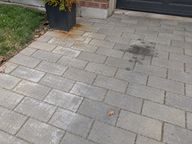
This guide covers wooden decks, wooden fences and interlock, the surfaces our pressure washing service handles around Markham and nearby. The step-by-step for a deck is further down the page.
What PSI should you use on a deck, fence or pavers?
About half what you would use on concrete pavers. Published guidance puts treated wood at 800 PSI or less and interlock at around 1,500 PSI.
This is what the manufacturers and industry groups say, surface by surface:
Scroll sideways to see the whole table.
| Surface | Pressure | Tip, distance, technique | Source |
|---|---|---|---|
| Pressure-treated pine deck or fence | No more than 800 PSI | White or green fan tip, never red or yellow. At least 8 inches away, strokes along the grain, pull back past 12 inches to change direction | Viance |
| Western red cedar | Pressure washing not recommended | Soapy water or diluted oxygen bleach, a stiff brush and a hose | Western Red Cedar Lumber Association |
| Painted or stained wood | Low | Same tip as bare wood. Never use high pressure to strip paint that is still tightly bonded, and never power wash lead paint | USDA Wood Handbook |
| Concrete interlock pavers | Around 1,500 PSI, or a low setting | The widest fan tip you have. At least 24 inches away if you can’t turn the pressure down, wand at knee height and angled at 45° | Western Interlock, Unilock |
| Composite decking | Per the maker | Read the brand’s care guide before you start | Manufacturer |
Good to know
Check what your machine puts out at full power. If it’s well above 800 PSI and isn’t adjustable, the simplest way to lower the pressure that reaches the wood is to stand further back and use a wider tip.
On tip colours, Alkota, a pressure washer manufacturer, lists the white 40° tip for sweeping large areas and rinsing, and the green 25° tip for decks and fences.
It warns that the red 0° tip and the rotary “turbo” nozzle can damage surfaces quickly. Consumer Reports goes further and advises getting rid of the 0° tip altogether.
Why does pressure washing damage wood?
Because water at high pressure cuts away the softer wood between the growth rings. The USDA Forest Products Laboratory’s Wood Handbook explains that power washing erodes the less dense earlywood more than the dense latewood, leaving ridges that are hard to paint.
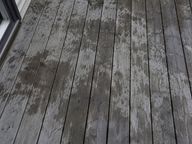
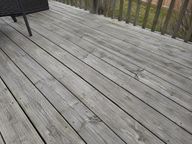
That’s the rough, corduroy texture you see on a deck that was washed too hard.
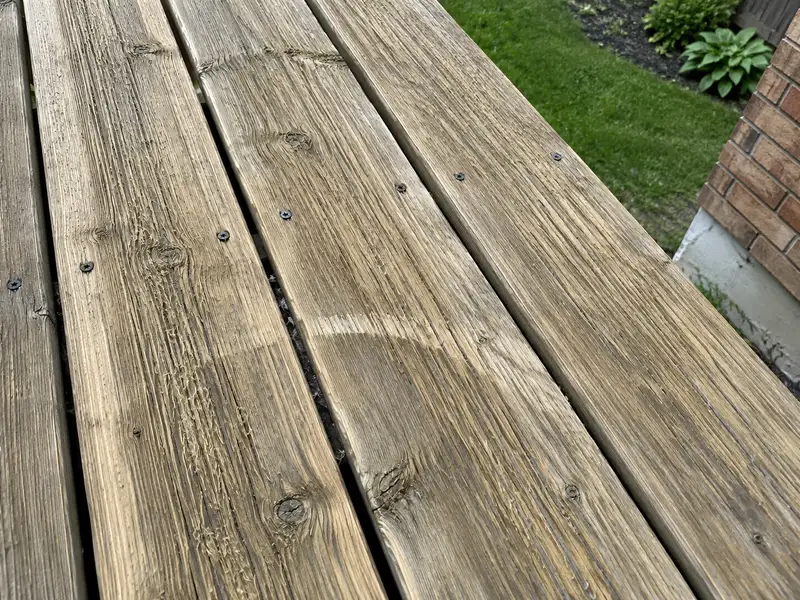
The other common marks are fuzzy, raised fibres (sometimes called furring) and lines or arcs where the tip stopped or turned. The Wood Handbook treats raised grain from washing as something to sand off before refinishing, once the wood is dry.
Deep gouges and ridges usually can’t be fixed without sanding hard or replacing the board.
Cedar is a soft, low-density wood, and the Western Red Cedar Lumber Association says power washers can seriously damage cedar deck surfaces. It doesn’t recommend them for cedar decks or any other cedar product.
Its advice for yearly cleaning is warm soapy water for dirt and diluted oxygen bleach for mildew. Pressure-treated pine stands up better, but only at the low settings above.
Can washing bring back the colour of grey wood?
Not really. The Wood Handbook says weathered wood looks silvery grey because weathering removes the coloured parts of the surface, and that cleaning wood doesn’t add colour back.
Removing mildew reveals the original colour underneath. Some cleaners pulp the grey surface so the washer can strip it, which looks like restored colour but is really a thin layer of wood gone.
If you want the warm colour back, the answer is a stain after cleaning. Our deck staining guide covers when to stain and which kind, and fence painting vs staining helps if the fence is next.
When is the best time to pressure wash in Ontario?
Late spring through early fall, on a dry, mild day with more dry days to follow. The washing itself only needs weather above freezing, but what comes after needs dry weather.
In the GTA that rules out winter, when rinse water freezes on steps and paths, and makes late fall a gamble.
Spring is the natural time. The Western Red Cedar Lumber Association suggests cleaning a deck once a year, in the spring, and a winter of wet leaves, snow and road grit leaves decks and driveways at their worst by April.
Plan around the drying time. Each surface has its own wait before the next step:
Scroll sideways to see the whole table.
| Surface | Wait before the next step | Source |
|---|---|---|
| Wood deck after cleaning | 24–48 hours before staining | Sherwin-Williams |
| Wood deck after rain | 24–48 hours before staining | Sherwin-Williams |
| Cedar | Moisture content below 20% before refinishing | Western Red Cedar Lumber Association |
| Interlock pavers | Fully dry before polymeric sand goes in | Techniseal |
| Fresh polymeric sand | 24 hours without rain, above 0°C for 48 hours | Techniseal |
Shady decks and the north side of a fence dry slowest, so give those spots longer.
The interlock figures come from Techniseal’s data sheet for its RG+ polymeric sand. Our interlock cleaning guide goes through that part of the job.
What mistakes leave permanent marks?
Most damage comes from a few habits, and nearly all of them are about wood.
On wood
- Running a deck at the machine’s full pressure because “it cleans faster”.
- Using the red 0° or yellow 15° tip, or a turbo nozzle, on wood or coloured pavers.
- Holding the tip still, or stopping and turning mid-board, which leaves arcs and stripes.
- Spraying across the grain instead of along each board.
- Pressure washing cedar at all, when soap, oxygen bleach and a brush would do.
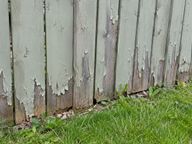
- Trying to blast off paint that is still well stuck. The Wood Handbook warns this can easily cause deep erosion, and if paint only comes off at high pressure it probably doesn’t need to come off.
- Staining a deck before the boards have dried through.
On interlock
Spraying straight down into interlock joints blows the sand out of them. Unilock suggests holding the wand at knee height and angling it at 45°.
If a white film appears after you re-sand, see our guide on removing polymeric sand haze.
Chemicals, old paint and your own safety
Watch out
The Wood Handbook says power washing isn’t suitable for lead paint. If an older fence or porch has many layers of paint, test it before you start.
Never mix chlorine bleach with ammonia or any cleaner containing ammonia. Together they give off toxic fumes.
Then there’s the risk to you. Consumer Reports reported that pressure washer injuries sent an estimated 6,057 people in the US to the emergency room in 2014.
Wear eye protection, long pants and sturdy shoes, and see a doctor about any skin break from the spray, even a small one.
How much does pressure washing cost?
HomeStars’ Canadian price guide, updated August 21, 2026, puts most residential pressure washing jobs at $150 to $600 or more, or about $0.15 to $0.75 per square foot. It doesn’t give GTA-only figures.
Its ranges for the surfaces on this page:
Scroll sideways to see the whole table.
| Job | Typical cost (HomeStars) |
|---|---|
| Driveway, single car | $100–$150 |
| Driveway, double car | $150–$210 |
| Driveway, larger than a double | $210–$260 |
| Deck or patio | $120–$240 |
| Fence, per 100 ft | $180–$300 |
These are published market ranges, not our prices. The wash is often only the first half of the job.
Interlock usually needs new joint sand afterwards, and a deck or fence needs a finish once it has dried, so compare quotes on the whole job. Our guides on polymeric sand and deck staining costs cover those parts.
When it makes sense to call someone
A small, sound pressure-treated deck or a short run of fence is a fair weekend job with a rented machine, as long as you test first and keep the pressure down.
It’s worth getting help in a few cases:
- The deck is cedar.
- The boards are already splintering.
- There’s old paint you’re not sure about.
- The wash is the first half of a staining or re-sanding job, and you’d rather not time the weather yourself.
Our pressure washing service covers decks, fences and interlock, and once everything is dry we can follow it with new polymeric sand, paint or a waterproof coating.
Call (437) 684-2535 or text us a photo of the deck, fence or driveway, and we’ll come and look and give you a free quote.
Step by step
- Clear and sweep the deck. Move furniture and planters, sweep off leaves and dirt, and dig debris out of the gaps between boards so water can drain.
- Check the boards and the old finish. Set any raised nails or screws, note soft or split boards, and find out what finish is on the wood. Old paint may contain lead, which should never be pressure washed.
- Wet plants and apply a deck cleaner. Soak nearby plants and lawn, then apply a cleaner made for decks with a pump sprayer or the low-pressure soap tip. Let it sit for the time on the label without drying out.
- Set up the washer for wood. Use the lowest setting that cleans, no more than about 800 PSI, with a white 40° or green 25° fan tip. Never use the red or yellow tip. Test on a hidden board first.
- Rinse with the grain. Hold the tip at least 8 inches back and sweep along the length of each board in smooth, overlapping strokes. Pull back past 12 inches before you change direction.
- Let the wood dry fully. Give the deck 24–48 hours of dry weather before any stain or coating, longer in shade or cool weather. Lightly sand any fuzzy, raised fibres once it is dry.
Other questions people ask
Can you pressure wash a deck?
Yes, a pressure-treated pine deck can be pressure washed if you keep the pressure low and the tip moving. Guidance published by Viance, which makes wood preservatives, says no more than 800 PSI, a white or green fan tip and a distance of at least 8 inches. Cedar is different: the Western Red Cedar Lumber Association says pressure washing is not recommended for cedar decks. Composite boards follow the maker's care guide.
How do I clean my deck without a pressure washer?
Sweep it, then scrub with warm soapy water and a stiff bristle brush and rinse with a garden hose. For mildew, the Western Red Cedar Lumber Association recommends diluted oxygen bleach, and the USDA Wood Handbook notes that oxygen bleaches have been reported to be less likely than chlorine bleach to damage low-density woods such as western red cedar. It takes longer, but it carries no risk of gouging the boards.
How can I clean pressure treated wood?
Start with a deck cleaner or soapy water and a brush, then rinse at low pressure along the grain. The guidance Viance publishes for treated wood is no more than 800 PSI, a white or green fan tip and at least 8 inches between the tip and the board. Sherwin-Williams says to let a cleaned deck dry for 24 to 48 hours before you stain it.
What do you put on a deck before pressure washing?
A cleaner made for wood decks, applied and left on for the time the label gives. It loosens dirt, mildew and algae so you can rinse at a lower pressure. Wet the plants around the deck first and rinse them again afterwards. Never mix chlorine bleach with ammonia or cleaners containing ammonia, because together they give off toxic fumes.
Can you pressure wash a painted fence?
Gently, to clean it or to knock off paint that is already peeling. The USDA Wood Handbook warns that the pressure needed to strip tightly bonded paint can easily cause deep erosion of the wood, so if paint only comes off at high pressure it probably doesn't need to come off. Power washing is also not suitable for paint that contains lead.
Sources
- HomeStars: How much does pressure washing cost? (price guide, updated August 21, 2026)
- Viance (TreatedWood.com): Is pressure washing bad for my deck? (article by John Worth, Deck Medic)
- Western Red Cedar Lumber Association: Cedar decking care and maintenance
- Western Red Cedar Lumber Association: Cedar decking restoration
- USDA Forest Products Laboratory: Wood Handbook (FPL-GTR-190), chapter 16, Finishing of Wood
- Western Interlock: Best practices for pressure washing pavers
- Unilock: Spring paver maintenance tips
- Alkota: What do different nozzles for pressure washers do?
- Sherwin-Williams: How to plan deck staining
- Techniseal: RG+ Polymeric Sand technical data sheet
- Consumer Reports: Consumer Reports zeros in on pressure washer safety
Related guides and service
- How to clean interlock without damaging it To clean interlock in Ontario, sweep it, pull the weeds, treat stains with a cleaner made for concrete pavers, then scrub with soap and water.
- Deck staining in Ontario: when to stain, when not to, and which stain In Ontario, deck staining goes best from late May to mid-September, on wood that's dry right through, with no rain in the forecast.
- Deck sealer vs stain vs waterproofing: what each does and which your deck needs A deck sealer is a clear water repellent. It soaks in and makes water bead, but on deck boards it lasts about a year.
- Fence painting vs staining: cost, looks and how long each lasts Paint and solid-colour stain form a film on a wood fence and last longest: about 6 to 10 years on smooth pine with a primer and two top coats, according to the USDA Forest Products Laboratory.