How to remove polymeric sand haze from pavers
Short answer
Polymeric sand haze is sand dust and binder that set on the face of the pavers. In Ontario, let the joints cure first (Techniseal says at least 30 days), then scrub the haze off with a paver haze or efflorescence cleaner diluted 1:4 or weaker, on a dry day between 10°C and 30°C. Alliance Gator also lists a hot pressure washer, and says light haze can weather away with rain.
Key numbers
- Wait before cleaning
- At least 30 days after the sand goes in
- Cleaner strength
- 1:4 or weaker, 1:8 on very light or dark pavers
- Air temperature for cleaning
- 10°C to 30°C, on a dry surface
- Hot water that strips set sand
- 82°C (180°F) or hotter
- Efflorescence on a new install
- Wait about 60 days before treating
In this guide
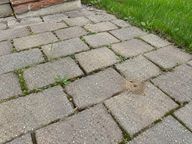
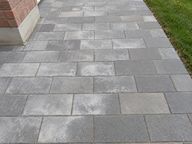
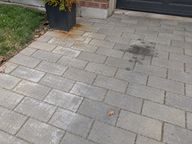
Polymeric sand haze is a thin film of sand dust and binder that set on the face of the pavers instead of in the joints. To remove polymeric sand from pavers once it has set, let the new joints cure for at least 30 days, then scrub it off with a weak paver haze or efflorescence cleaner on a dry day between 10°C and 30°C, or strip it with a hot pressure washer. Light haze can weather away with rain.
If the film is spread across a whole driveway, or you’d rather not handle acid cleaners, have a look at our interlock cleaning and sealing service.
What causes the white haze?
The haze is polymer that was activated on the paver surface. Techniseal’s data sheet for its RG+ sand explains it plainly: if the pavers are damp, the moisture activates the polymer, which makes sand stick to the surface and stain it.
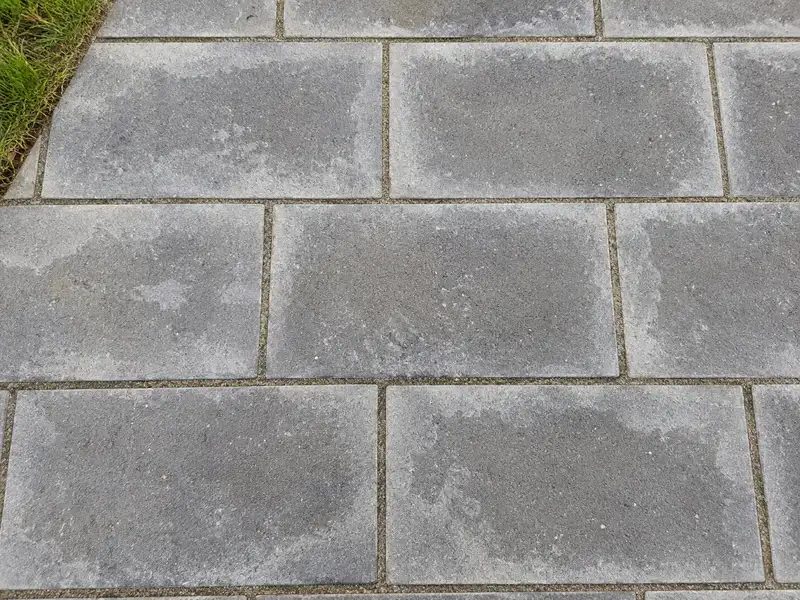
Alliance Gator names the same causes: high humidity, damp pavers, and a surface that wasn’t cleaned properly before watering. Techniseal also warns against flooding the surface when you water the sand in.
In practice it usually traces back to one of these:
- Sweeping sand onto pavers that were still wet from rain, dew or a morning hose-down.
- Skipping the leaf blower, or blowing too lightly, so fine dust stayed in the texture of the pavers.
- Watering with a hard stream instead of a gentle shower, so sandy water splashed across the surface.
- Installing on a humid, still day when the surface never fully dried.
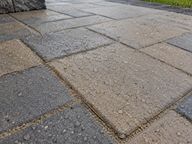
Deeply textured pavers hold the most dust. Unilock says even careful work can leave a residue that looks like a film on them. If you see buildup, it says to stop, let the surface dry and brush it off before wetting.
Is it haze or efflorescence?
If the film showed up right after the sand job and sits heaviest near the joints, it’s probably haze. A powdery white bloom across the paver faces is more likely efflorescence.
Efflorescence is a white, powdery salt deposit that comes up out of the concrete itself. Unilock calls it naturally occurring calcium salts, and Alliance Gator says it often disappears on its own, usually after the first year.
Alliance Gator even says a white haze on pavers is most likely efflorescence. Polymer haze is different: it’s leftover sand and binder from the install, sitting on top.
Scroll sideways to see the whole table.
| What you see | Likely cause | First thing to try |
|---|---|---|
| Powdery white bloom over the paver faces | Efflorescence (salts from inside the concrete) | Wait. Alliance Gator suggests about 60 days on a new install before using an efflorescence cleaner |
| Dull film or streaks that showed up right after the sand job, heaviest near joints | Polymer haze from dust or wet pavers | Paver haze or efflorescence cleaner, or a hot pressure washer, after the joints cure |
| Gritty sand stuck in the texture, rough to the touch | Sand that set on the surface | Hot water at 82°C or more, per Alliance Gator |
| Dark blotches along joints, not white | Staining from the sand’s binder | Wait. Alliance Gator says weathering and UV break down the dark staining its Nitro sand can leave |
You can have both at once. Alliance Gator notes that wetting the pavers to activate the sand can itself bring up efflorescence, and says its efflorescence cleaner should remove either one.
Good to know
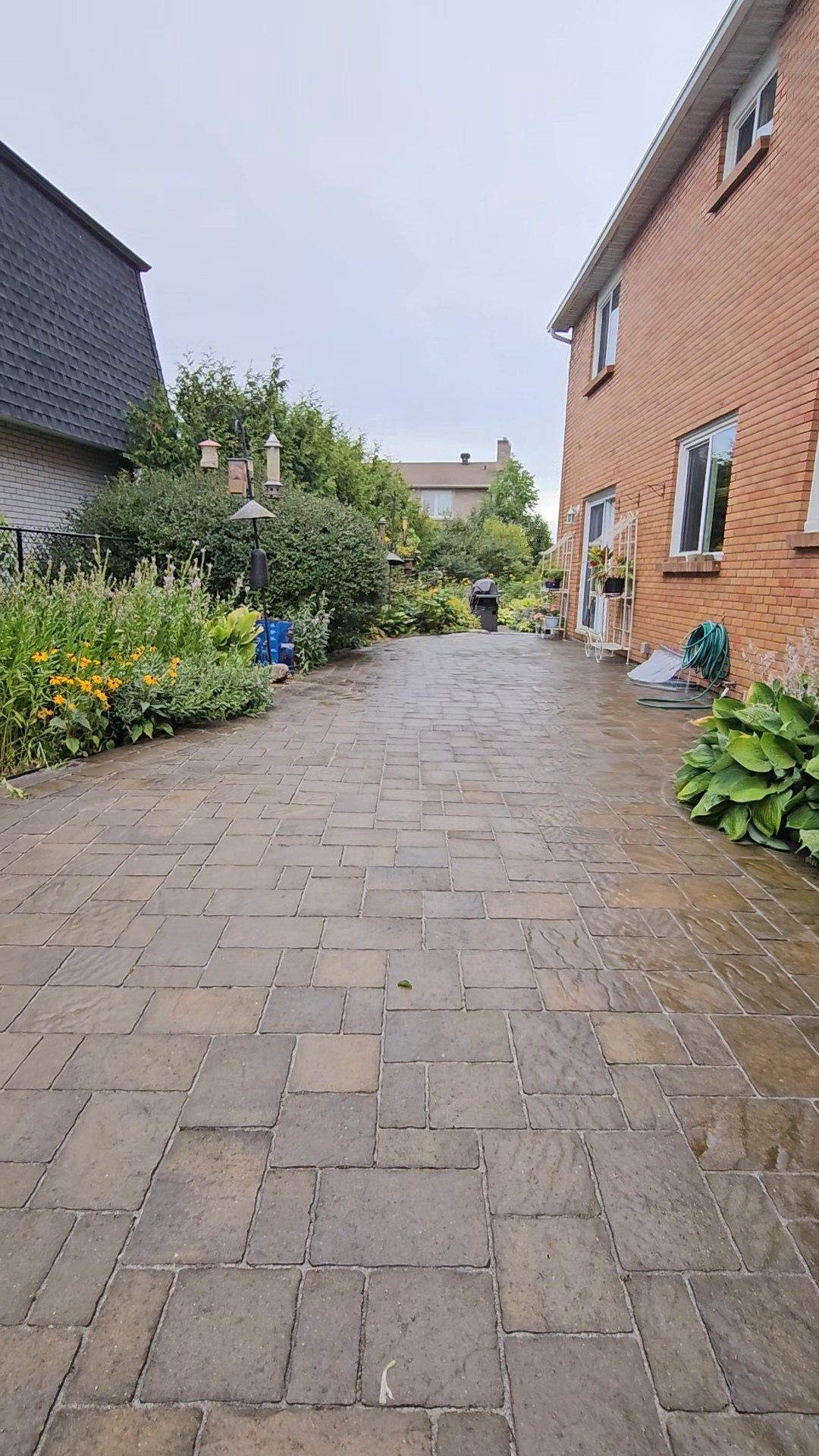
Whatever you use, try it first on about 4 sq ft (0.4 m²) in a corner or behind a planter. Let it dry fully before you judge the colour, because wet pavers look darker.
How do you remove polymeric sand haze from pavers?
Use a diluted paver haze or efflorescence cleaner, or strip the haze with a hot pressure washer. Alliance Gator names both for its sands, and says bad cases may need repeat applications. Techniseal also sells a separate product, Paver Restorer, that it lists for haze left by some polymeric sands.
Scroll sideways to see the whole table.
| Method | How it works | Best for |
|---|---|---|
| Haze or efflorescence cleaner | An acid-based cleaner, diluted 1:4 or weaker, scrubbed in and rinsed off | Most homeowners, patios and walkways |
| Hot pressure washer | Water at 82°C (180°F) or hotter reactivates the polymer | Thick haze or set sand over a large area |
| Boiling water | The same heat, poured by hand | A small patch, per Alliance Gator |
Using a cleaner
A paver haze or efflorescence cleaner is the practical choice for most homeowners. Unilock notes that these cleaners are typically acid-based, and they’re used heavily diluted.
Techniseal’s data sheets for Paver Restorer and Pre-Seal Cleaner give the same directions: 1 part product to 4 or more parts water, never full strength. The numbered steps further down follow those sheets. Read your own product’s label, because ratios and surface limits vary by brand.
Using hot water
A hot pressure washer works by heat, not force. Alliance Gator says water at 82°C (180°F) or hotter reactivates the polymer so set sand can be stripped away, and suggests boiling water for a smaller area.
Since the heat is what reactivates the polymer, an ordinary cold-water washer can’t do the same thing.
Before you start
- Techniseal’s Pre-Seal Cleaner is for concrete only. Check what your surface is first.
- Unilock warns that acid cleaners can slightly change paver colour. Techniseal suggests starting at 1:8 on very light and very dark pavers.
- Protect plants, cars and the lawn from splash and drift. Techniseal’s sheets also ask you to check your municipality’s rules on runoff before rinsing cleaner toward the street or a storm drain.
Watch out
Keep acid cleaners off natural stone. Techniseal’s Paver Restorer sheet rules out acid-sensitive stone such as limestone, as well as wet-cast pavers and stamped or poured concrete.
When can you clean it in Ontario?
Wait until the joints have fully hardened, then pick a mild, dry stretch. Techniseal’s EZSAND sheet recommends waiting at least 30 days after installation before cleaning or sealing, and restricts pressure washers in that first month.
Techniseal’s haze and efflorescence cleaners need a dry surface that’s warm to the touch and a temperature between 10°C and 30°C. The Paver Restorer sheet adds: not under blazing sun.
Around Markham, that makes May to September the easy window. Environment Canada’s 1981–2010 normals for the Buttonville station in Markham give these average daily highs:
Scroll sideways to see the whole table.
| Month | Average daily high | Good for cleaning? |
|---|---|---|
| April | About 12°C | Only on a mild afternoon |
| May | About 19°C | Yes |
| July | About 27°C | Yes, in the morning |
| September | About 21°C | Yes |
| October | About 14°C | Only on a mild afternoon |
In spring and fall, pick a mild afternoon. In midsummer, clean in the morning before the pavers get hot.
If your sand went in during late fall, it’s usually better to leave the haze through winter and clean in spring than to scrub on a day below the label’s 10°C minimum. Rain over the winter may fade some of it in the meantime.
Mistakes that make haze worse
- Scrubbing before the joints have hardened and pulling fresh sand out with the haze.
- Using a cleaner full strength. Techniseal is clear that its products can damage the pavers if they aren’t diluted.
- Letting cleaner dry on the surface. Techniseal says to keep it wet until it’s rinsed off.
- Reaching for muriatic acid. Techniseal sells its paver cleaners as muriatic-free so they don’t damage the surface.
- Sealing over haze or efflorescence to hide it. The film gets trapped under the sealer.
- Blasting the joints with a narrow pressure-washer tip, which can empty them and mean re-sanding.
How to avoid haze next time
Keep the pavers dry and free of dust before any water touches the sand. The order matters:
- Install on dry pavers, never after rain, dew or a hose-down.
- Sweep the sand into the joints, then blow the surface until no dust rises.
- Water gently in sections, with a shower setting rather than a jet.
Good to know
On textured pavers, Techniseal’s RG+ sheet suggests blowing excess water off each section after you wet it. That carries away the last of the polymer residue before it can set.
Our guide on how to apply polymeric sand covers the full sequence. The polymeric sand guide explains how long joints last and when they need replacing.
When it’s worth calling someone
A small patio with light haze is a reasonable Saturday job with a jug of paver cleaner and a street broom. It’s worth getting help when:
- the haze covers a whole driveway
- you can’t tell if it’s haze, efflorescence or both
- the pavers are natural stone
- the joints have washed out and need redoing anyway
Cleaning, re-sanding and sealing usually belong in the same plan, in that order.
We work across Markham and nearby towns such as Richmond Hill. If you want us to look at yours, call or text (437) 684-2535, or see what our interlock cleaning and sealing service covers.
You can also read how to clean interlock without damaging it and whether to seal your interlock before deciding.
Step by step
- Check what the white film is. Think about when it showed up. A film that appeared right after the sand job, in streaks or heaviest near the joints, points to sand haze. A powdery white bloom points to efflorescence. You can't always tell, and a paver efflorescence cleaner handles either.
- Let the joints cure. Wait until the new sand has hardened. Techniseal says to wait at least 30 days after installing polymeric sand before using its haze cleaner, and restricts pressure washers during that first month.
- Test a small hidden patch. Try the cleaner on about 4 sq ft (0.4 m²) in a corner or behind a planter, let it dry, and check the colour before doing the whole surface.
- Wet the joints, then let the surface dry. Soak the surface so the joints fill with water, then wait until the paver faces are dry. Water in the joints cuts down how much cleaner soaks into the sand and makes it easier to rinse out.
- Mix the cleaner weak. Follow the label. Techniseal's Paver Restorer and Pre-Seal Cleaner both call for 1 part product to 4 or more parts water, starting at 1:8 on very light or very dark pavers. Never use either full strength.
- Clean one section at a time. Work about 200 sq ft (19 m²) at a time, starting at the low end of the slope. Pour or spray the solution on (not with a mop or broom), cover the section evenly, gently scrub with a street broom, and never let it dry on the pavers.
- Rinse well and let it dry. Rinse each section until no foam is left, overlapping the edges of the last one. Let everything dry, then look again. If some haze remains, repeat the cleaning.
Other questions people ask
Will polymeric sand haze go away on its own?
Sometimes. Alliance Gator says the occasional haze from its sands, usually from installing on a damp surface, can weather away with time and rain, and that because they contain no cement they won't leave a permanent stain. A thick film of set sand is more likely to need a cleaner or hot water. You have to wait about 30 days before cleaning anyway, so see how much the rain takes off in that time.
Does vinegar remove polymeric sand haze?
We couldn't find a sand or paver maker that recommends it. Vinegar is a weak acid, but the manufacturer instructions we used call for a paver haze or efflorescence cleaner instead. Unilock warns that acid-based cleaners can slightly change paver colour, so whatever you use, test a hidden patch first. Keep acids off limestone and other acid-sensitive stone.
How do you get rid of excess polymeric sand before it hardens?
Sweep it off with a soft broom while the sand is still dry, then go over the whole surface with a leaf blower until no dust rises. Techniseal says to hold the blower far enough away that it doesn't empty the joints. Only then add water. Dry loose sand is easy to remove. The same sand, once wet, sets into haze.
Can you pressure wash polymeric sand haze off pavers?
Alliance Gator lists a hot pressure washer as one way to remove haze, and says water at 82°C (180°F) or more reactivates the polymer so set sand can be stripped. A cold, narrow jet doesn't do that, and Techniseal warns that jets that are too direct can damage the surface. It also restricts pressure washers for the first 30 days.
Can I seal over polymeric sand haze?
No. Techniseal warns that whitish efflorescence left on new pavers can stay trapped under the sealer's film, and Unilock says pavers must be clear of efflorescence before sealing, to avoid haze under the sealer. The same goes for sand haze. Clean the surface, let it dry completely, and check it in daylight before any sealer goes down.
Sources
- Techniseal: Paver Restorer technical data sheet (2024)
- Techniseal: Pre-Seal Cleaner for Pavers technical data sheet (2023)
- Techniseal: EZSAND polymeric sand technical data sheet
- Techniseal: RG+ Polymeric Sand technical data sheet
- Techniseal: Paver care, cleaners and stain removers brochure
- Alliance Gator: Gator jointing material FAQ
- Alliance Gator: 15 questions we get asked all the time
- Alliance Gator: 8 facts about efflorescence
- Unilock: Efflorescence 101, what it is and how to remove it
- Unilock: Polymeric sand guide
- Unilock: Paver sealing, what it is and whether it's right for you
- Environment and Climate Change Canada: 1981–2010 climate normals, Toronto Buttonville A (Markham)
Related guides and service
- Polymeric sand: what it is, when to replace it, and what affects the cost Polymeric sand is joint sand mixed with a binder that hardens as it dries, locking interlock pavers together and resisting weeds, ants and washout.
- How to apply polymeric sand (and the mistakes that ruin it) To apply polymeric sand on Ontario interlock, clear the joints at least 1.5 inches (4 cm) deep, wait until the pavers are fully dry, sweep the sand in, compact it with a plate compactor, leave it 1/8 inch (3 mm) below…
- How to clean interlock without damaging it To clean interlock in Ontario, sweep it, pull the weeds, treat stains with a cleaner made for concrete pavers, then scrub with soap and water.
- Should you seal your interlock? When and how often in Ontario Interlock sealing is optional. Unilock says its pavers don't need it, but a sealer brings back colour, makes stains easier to clean and can harden joint sand.