Landscaping and interlock work in Scarborough
Short answer
We do landscaping in Scarborough, just across Steeles Avenue from our base in Markham, Ontario. That means interlock repair and polymeric sand, lawn care and sod, spring and fall cleanups, hedge trimming, and deck and fence work, from Milliken and Agincourt down to Birch Cliff and the Bluffs. Scarborough is part of Toronto, so the City of Toronto's tree, ravine, fence and yard waste rules apply, not York Region's.
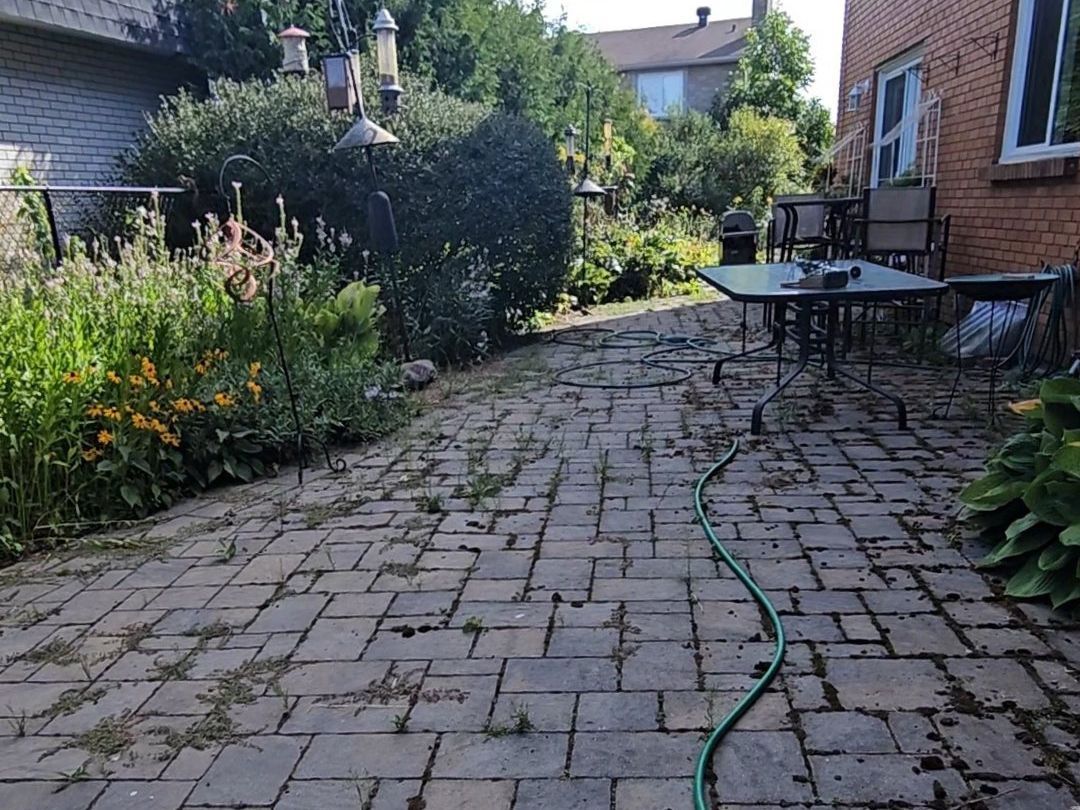
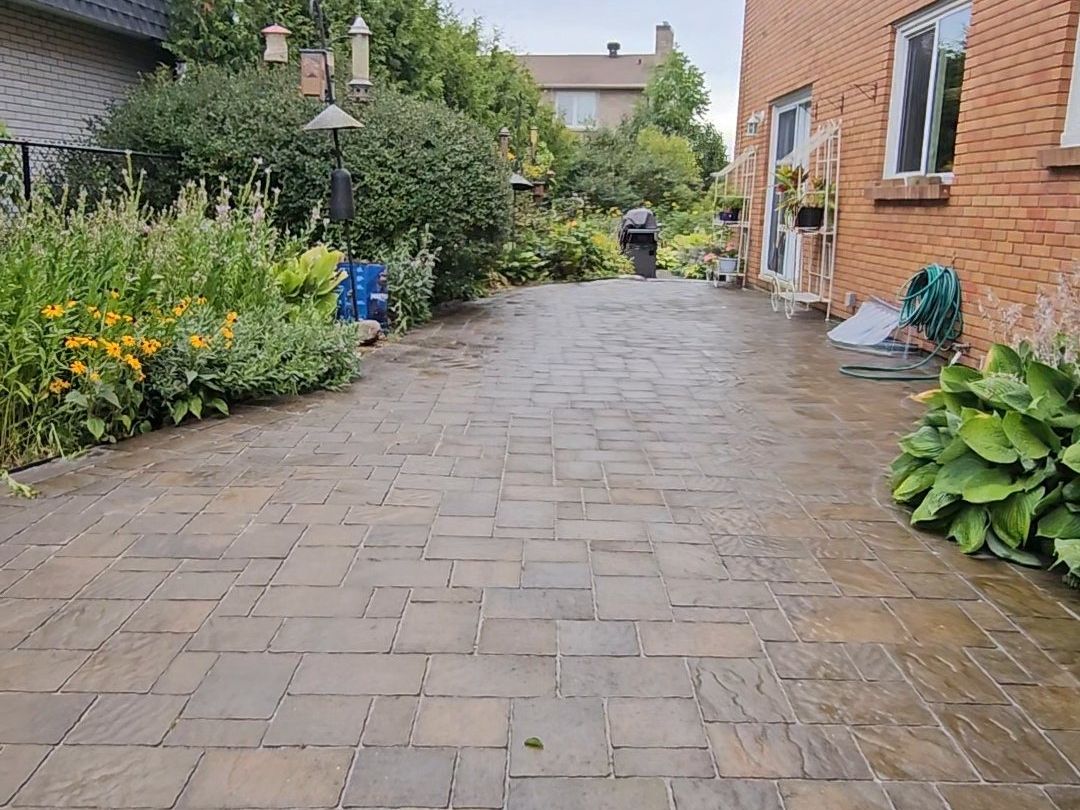
Scarborough is the part of Toronto closest to us. Markham, where we’re based, sits on the other side of Steeles Avenue, which is the line between the two cities, so landscaping in Scarborough is a short drive for us.
Most of Scarborough was built out as suburbs after the Second World War, so a lot of the yards here are older than those in Markham’s newer subdivisions. What sets it apart is the ground: the Scarborough Bluffs run about 15 km along the lake, and Highland Creek and the Rouge River cut deep wooded valleys through it. Plenty of backyards end at a slope.
What landscaping work do Scarborough yards need?
It depends a lot on when the street was built.
- Post-war bungalow streets like Wexford, and the older lakeside areas like Birch Cliff and Cliffcrest, have big trees and a lot of leaves. A thick layer of leaves left on the grass over winter is one of the conditions that encourages snow mould, so a fall cleanup before the last yard waste pickup in November is worth booking. Our fall cleanup checklist covers the timing.
- Driveways and walks that were redone in interlock years ago tend to sink near the garage and the street, and the joints fill with weeds and moss. That’s often a repair job rather than a replacement, for the reasons in our guide on why interlock sinks. See interlock repair and polymeric sand and weed removal, or cleaning and sealing if the pavers are sound but grey.
- In the neighbourhoods up north that were built from the 1970s on, like Malvern and Milliken, decks and fences have had decades of sun and freeze-thaw. Washing, repairs and a new coat go a long way. See deck staining and sealing and deck and fence repair.
- Small front lawns along busy roads take a beating from road salt and foot traffic. Patches can be cut out and re-sodded, or the whole front redone with new sod. After that, regular lawn care (mowing through the season) keeps a thin lawn from sliding back.
Which Toronto rules affect yard work in Scarborough?
The City of Toronto’s rules apply, not Markham’s or York Region’s, because Scarborough has been part of Toronto since 1998. These five come up most. The City’s own pages, linked below, have the final word.
Scroll sideways to see the whole table.
| Rule | What it says | Applies |
|---|---|---|
| Tree permit | Needed to injure or remove a private tree 30 cm or more across, measured 1.4 m up | Everywhere; any size in ravine areas |
| Ravine permit | Needed for grading, fill, tree removal or retaining walls | Ravine and natural feature protection areas |
| Yard waste | Every other week, kraft paper bags or rigid containers | Mid-March to mid-November |
| Fence height | 1.2 m front yard near the street, 2.0 m side and rear | New or replacement fences |
| Boulevard | Homeowner cuts the grass and pulls weeds | Strip between sidewalk and road |
Trees
Toronto requires a permit to injure or remove a private tree with a trunk 30 cm (about 12 inches) or more across, measured 1.4 m above the ground. That’s a bigger tree than Markham’s 20 cm threshold. Injury counts as well as removal, so heavy digging over the roots of a big tree can need a permit. The City’s permit page explains how to measure and apply. From September 1, 2026, the City also added a “distinctive tree” category for large, healthy trees over 61 cm and new permit fees in ravine areas, set out in its tree bylaw review.
Ravines and the Bluffs
This one is easy to miss. If your lot is inside one of Toronto’s ravine and natural feature protection areas, you need a permit before you:
- Dig out or add soil on a slope.
- Place or dump fill, including earth, sand and gravel.
- Harm or remove any tree, whatever its size.
- Build a new retaining wall or replace an old one.
Lots along the Bluffs and the Highland Creek and Rouge valleys are the ones most likely to be inside a protected area, which takes in parts of Guildwood, Cliffcrest, Birch Cliff and Highland Creek.
A new patio base or a load of topsoil to level a sloping lawn can need a permit there, and near valleys and the shoreline the City may also want to see a permit from the Toronto and Region Conservation Authority for grade changes. Mowing, cleanups, hedge trimming and deck or fence staining don’t change the grade, so they aren’t affected.
The City’s permit page links to a map that shows the protected areas, so check it before you book anything that moves soil.
Yard waste and leaves
The City collects yard waste every other week on your garbage day, from around mid-March to mid-November. Markham’s 2026 season ends on October 30, so Toronto’s runs a couple of weeks later into the fall, which helps with late leaf drop.
Use kraft paper bags or open rigid containers 55 to 95 cm tall, never plastic bags or cardboard boxes. Branch bundles can be up to 1.2 m long and 0.6 m wide, under 20 kg, tied with natural fibre twine or rope, with no piece over 7.5 cm thick. Grass clippings aren’t collected.
Parts of Scarborough used to have vacuum leaf pickup from the curb. The City no longer runs it, so leaves have to go out in yard waste bags or containers. Raking leaves onto the sidewalk or road is an offence that could bring a $200 fine.
The boulevard is yours to keep up
The strip of grass between the sidewalk and the road belongs to the City, but Toronto expects the homeowner next to it to cut the grass, pull the weeds and keep it tidy. If you want it done as part of a mowing or cleanup visit, just say so when you ask for a quote.
Fences
Toronto’s fence bylaw sets these heights for houses:
Scroll sideways to see the whole table.
| Where the fence is | Height limit |
|---|---|
| Front yard, within 2.4 m of the street | 1.2 m maximum |
| Front yard, further than 2.4 m from the street | 2.0 m maximum |
| Side and rear yards (most cases) | 2.0 m maximum |
| On an unroofed deck outside the front yard, measured from the deck surface | 2.0 m maximum |
| Pool enclosure on a house lot | 1.2 m minimum |
A fence within 2.4 m of a driveway has to be see-through, like chain link, for at least the first 2.4 m back from the street, so drivers backing out can see the sidewalk. Repainting or staining an existing fence doesn’t change anything. If you’re replacing one, our guide on fence rules in Markham and Toronto goes through the differences.
Getting a quote in Scarborough
Text your street or postal code and a couple of photos to (437) 684-2535 (send a text), or use the form below, and we’ll set up a free visit.
If the back of your lot drops into the Highland Creek or Rouge valley or ends at the Bluffs, tell us that too. Mowing, cleanups and staining go ahead as normal there, but a patio base, a load of topsoil or a new retaining wall means checking the City’s ravine map first. Near the Pickering line or over in North York? We also work in Pickering, North York and the rest of the areas listed here.
Neighbourhoods in Scarborough we work in
Agincourt
Agincourt grew from a 19th-century village whose post office stood at Sheppard Avenue and Brimley Road, and today the name covers the area along Sheppard between Kennedy Road and Markham Road, from Highway 401 up to Finch Avenue. Off the main roads it's mostly houses on regular suburban lots. Where a driveway or front walk is interlock, the common problems are sunken sections near the garage and weedy joints, which call for lifting and releveling and fresh polymeric sand.
Milliken (Scarborough side)
Milliken is centred on Kennedy Road and Steeles Avenue, with Milliken Mills across Steeles in Markham. Most of the houses are two-storey detached homes with garages, built from the 1970s through the 1980s as the last farms gave way to subdivisions. After 40-odd years, front walks and steps from that era can settle, and decks out back have had decades of sun and freeze-thaw.
L'Amoreaux
L'Amoreaux runs east of Victoria Park Avenue and west of Kennedy Road, between Huntingwood Drive and McNicoll Avenue. Its detached houses and townhomes date from the late 1950s onward, with some apartment and condo towers mixed in. On a townhome or a smaller front yard, a tidy lawn, a trimmed hedge and a clean driveway make most of the difference, so regular lawn care and hedge trimming are the jobs that matter most.
Malvern
Malvern, in the northeast corner of the city north of Highway 401, was farmland until Canada Mortgage and Housing Corporation expropriated the farms to build a planned community of affordable homes. The first residents moved in in 1972, so the oldest homes and yards here are now over 50 years old, with the Rouge Valley close by. Small front lawns that have thinned out are good candidates for new sod.
Wexford
Wexford straddles Lawrence Avenue East between Victoria Park Avenue and Birchmount Road, and most of its houses are post-war bungalows. Bungalow lots often have a driveway running beside the house and mature trees out back. Fall leaf cleanups, worn fences that need repainting or staining, and tired garden beds along the foundation are the kind of work these yards tend to need.
Birch Cliff
Birch Cliff, along Kingston Road just east of Victoria Park Avenue, was the first part of Scarborough to be developed as a suburb, starting as a streetcar suburb in the 1920s. That makes it older than most of Scarborough, which was built after the Second World War, so expect smaller lots, narrower driveways and mature trees close to the house. Lots that back onto the Bluffs or a ravine are often inside Toronto's ravine protection area, where grading changes and retaining walls need a permit.
Cliffcrest
Cliffcrest sits on top of the Scarborough Bluffs between Midland Avenue and Bellamy Road, south of the rail line. It's mostly detached houses, many of them small and cottage-like, and the lots closest to the lake end at the top of the Bluffs. Mature trees mean real leaf drop in the fall, and anything that changes the ground near the bluff edge is a ravine permit question before it's a landscaping one.
Guildwood
Guildwood Village, south of Kingston Road and along the Bluffs, was laid out from 1957 on land sold off from the Guild Inn estate. The subdivision was planned with winding roads and cul-de-sacs, and the owners of the estate pushed to keep as many of the existing trees as they could. Big canopy trees mean shaded lawns, heavy leaf drop and roots under the driveway, so seasonal cleanups and patch repairs to lifted interlock make sense here.
Highland Creek
Highland Creek follows the lower part of the creek of the same name, with the University of Toronto Scarborough campus (opened 1965) on its west side and Port Union and West Rouge to the east. Much of the housing went up after the campus opened, beside a wooded valley that was left as green space. Yards that back onto the valley often slope, which matters for drainage, garden beds and any new patio.
Port Union
Port Union, also called Centennial Scarborough, runs from Kingston Road down to the lake between Highland Creek and Port Union Road. Older post-war homes sit next to subdivisions built since the 1990s on former waterfront industrial land. The newer streets have builder lawns and young plantings, while the older ones have mature trees and decks that are likely due for staining or sealing.
Before and after photos of our jobs, with what each one involved, are on our work page.
Postal codes in Scarborough
Scarborough addresses have postal codes starting with one of these:
- M1B Malvern and Rouge
- M1C Rouge Hill, Port Union and Highland Creek
- M1E Guildwood, Morningside and West Hill
- M1G Woburn
- M1H Cedarbrae
- M1J Scarborough Village
- M1K Kennedy Park, Ionview and East Birchmount Park
- M1L Golden Mile, Clairlea and Oakridge
- M1M Cliffside, Cliffcrest and Scarborough Village West
- M1N Birch Cliff and Cliffside West
- M1P Dorset Park, Wexford Heights and Scarborough Town Centre
- M1R Wexford and Maryvale
- M1S Agincourt
- M1T Clarks Corners, Tam O'Shanter and Sullivan
- M1V Milliken, Agincourt North and L'Amoreaux East
- M1W Steeles West and L'Amoreaux West
- M1X Upper Rouge
Check your postal code
What we do most in Scarborough
- Interlock repair & paver leveling
Interlock repair fixes sunken, heaved or broken pavers so your driveway, walkway or patio sits flat and safe again, without a full replacement.
- Polymeric sand & weed removal
We clear weeds, moss and worn-out sand from your interlock joints and refill them with polymeric sand that sets firm.
- Spring & fall cleanups
We clear the leaves, weeds and tired garden beds in fall and spring, so your yard is ready for winter or the growing season.
- Sod installation & lawn repair
We replace weedy, dead or bare lawns with fresh sod that looks finished the day it goes down.
- Hedge & bush trimming
We trim cedar hedges, privacy hedges and overgrown bushes in Markham and nearby, and rake up every clipping before we leave.
- Fence painting & staining
We wash, prep and repaint or waterproof wood fences that have gone grey, blotchy or started to peel, in Markham and nearby.
- Deck staining, sealing & waterproofing
We wash, repair and recoat grey, peeling or splintery wooden decks in Markham and nearby, finishing with paint or a waterproof coating.
What customers say
5.0 on Google · 7 reviews. Read all reviews on Google
Great experience! These guys did an amazing job bringing life back to my property. They removed all the weeds, treated the area, put mulch, and cleaned the interlock. The transformation was incredible! Very happy with the quality of work, professionalism, and the price. Highly recommend!
Read moreShow less
Ivanna B. · Google · August 2026 Worked w the owner, this was for yard cleanup, he had a professional crew and they got the job done fairly quickly in the front and backyard.
Jack K. · Google · October 2026 Very reasonable price, great service, very professional crew. They came to do a quote and at first their price seemed high, but when i saw them work it explained everything! They wend above and beyond, and fully transformed my front and backyard so it looks amazing. The quality of workmanship is really high, I would trust them to do literally everything around exterior of the house, i am planning to call the for gutter cleaning job in the fall.
Read moreShow less
Sofiia P. · Google · August 2026
Questions from Scarborough homeowners
Do I need a permit to cut down a tree in my Scarborough backyard?
If the trunk is 30 cm (about 12 inches) across or more, measured 1.4 m above the ground, yes. The City of Toronto's private tree bylaw covers injuring a tree as well as removing it. If your property is in a ravine and natural feature protection area, which takes in many lots near the Bluffs and the creek valleys, injuring or removing a tree of any size needs a permit.
When is yard waste picked up in Scarborough?
The City of Toronto collects yard waste every other week on your garbage day, from around mid-March to mid-November. Use kraft paper bags or open rigid containers between 55 and 95 cm tall. Branch bundles can be up to 1.2 m long and 0.6 m wide, under 20 kg, with no piece thicker than 7.5 cm. Grass clippings aren't collected.
Does the City still vacuum up leaves from the curb in Scarborough?
No. Toronto used to run a mechanical vacuum leaf collection program, limited to parts of Scarborough, Etobicoke and York, but the City no longer offers it. Leaves now go out in paper yard waste bags or rigid containers on your collection day. Raking leaves onto the sidewalk or road is an offence that could bring a $200 fine.
My backyard backs onto the Bluffs or a ravine. What work needs a permit there?
Check the City's ravine protection map first. In those areas Toronto needs a permit before you add or dig out soil on a slope, place fill such as sand or gravel, harm or remove any tree, or build or replace a retaining wall. Mowing, cleanups, hedge trimming and deck staining don't change the grade, so those aren't affected.
Who looks after the grass strip between my sidewalk and the road?
You do. The City of Toronto expects property owners to cut the grass, pull weeds and generally keep up the municipal boulevard next to their property, and it can enforce that under Chapter 743 of the Municipal Code. If you'd like it included in a mowing or cleanup visit, mention it when you ask for a quote.
Do you work in my part of Scarborough?
We're based in Markham, which borders Scarborough along Steeles Avenue, so the north end around Milliken, Agincourt and Malvern is closest to us. Scarborough postal codes all start with M1. Use the postal code check on this page, or text (437) 684-2535 with your street and a couple of photos, and we'll tell you whether we can come out for a free quote.
Sources
- City of Toronto: Yard waste
- City of Toronto: Leaf, grass, weed and boulevard maintenance
- City of Toronto: When to apply for a tree or ravine permit
- City of Toronto: Tree bylaw review (changes from September 1, 2026)
- City of Toronto: Fences
- Toronto Municipal Code, Chapter 447: Fences (Tables 1 and 2)
- City of Markham: Tree permit application
- City of Markham: Yard material collection
- University of Illinois Extension: Preventing winter damage to lawns
- Wikipedia: Scarborough, Toronto
- Wikipedia: Scarborough Bluffs
- Wikipedia: Agincourt, Toronto
- Wikipedia: Milliken, Ontario
- Wikipedia: L'Amoreaux
- Wikipedia: Malvern, Toronto
- Wikipedia: Wexford, Toronto
- Wikipedia: Birch Cliff
- Wikipedia: Cliffcrest
- Wikipedia: Guildwood
- Wikipedia: Highland Creek (Toronto neighbourhood)
- Wikipedia: Port Union, Toronto
- Wikipedia: List of postal codes of Canada: L
- Wikipedia: List of postal codes of Canada: M
- Canada Post: Find a postal code
Get a free quote
Tell us what needs doing at your place in Scarborough. We'll get back to you to book a visit, see the job and give you a price. Quotes are free.
Call or text (437) 684-2535.
Faster: text 2–3 photos of the area to the same number.
Thanks, we've got your request.
We'll be in touch to arrange a visit.
If you have photos of the area, text them to (437) 684-2535 and we'll take a look before we come out.