Polymeric sand installation and weed removal in Markham
We clear weeds, moss and worn-out sand from your interlock joints and refill them with polymeric sand that sets firm.
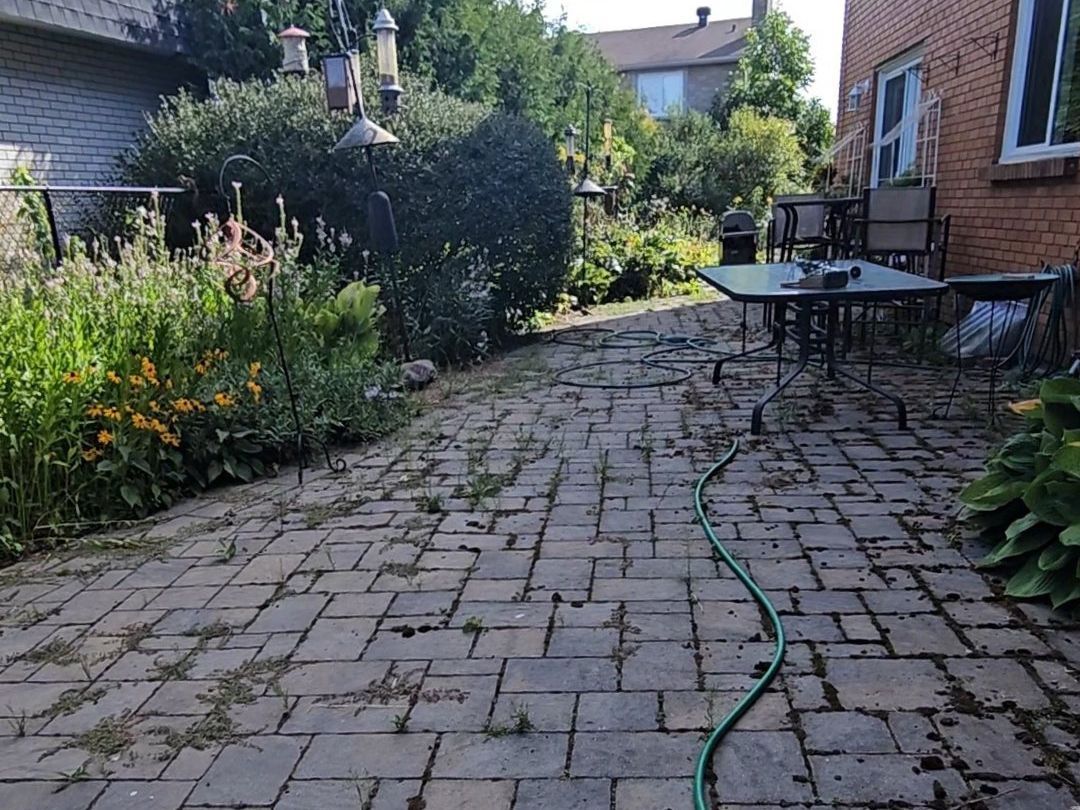
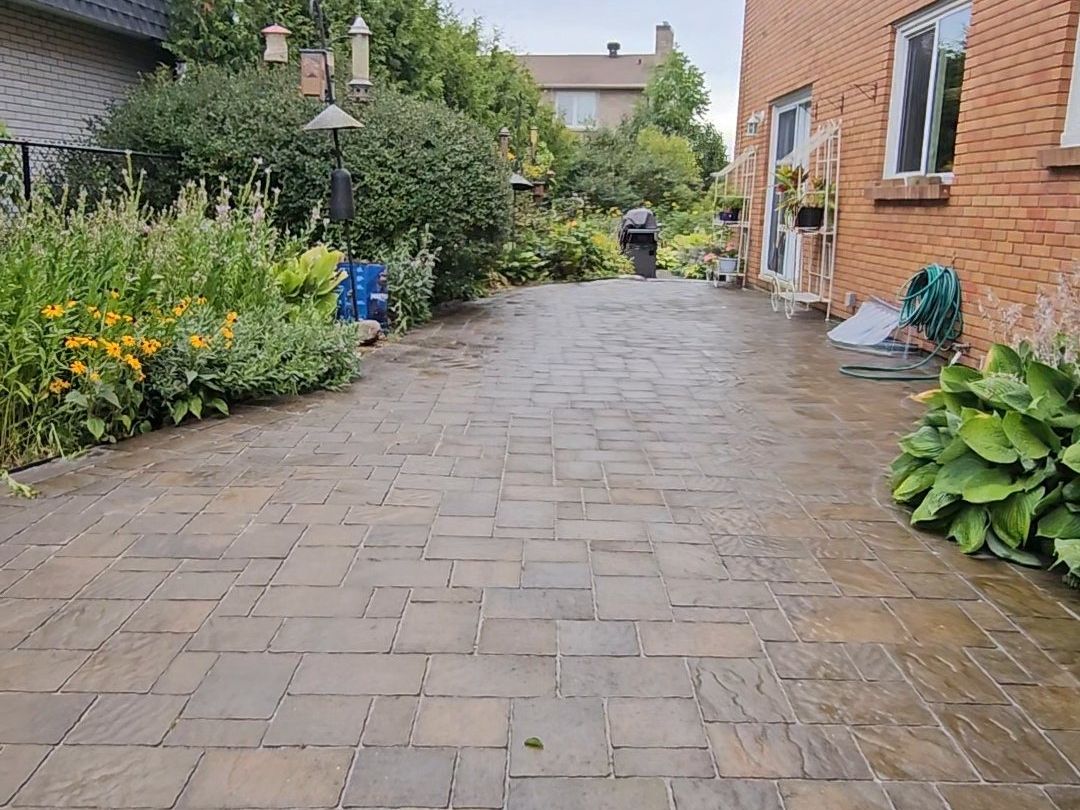
Great experience! These guys did an amazing job bringing life back to my property. They removed all the weeds, treated the area, put mulch, and cleaned the interlock. The transformation was incredible! Very happy with the quality of work, professionalism, and the price. Highly recommend!
What's included
- Pulling weeds, grass and moss out of the joints
- Pressure washing old joint sand out to the depth new sand needs
- Cleaning the paver faces, then letting everything dry
- Sweeping in new polymeric sand and compacting until joints stay full
- Blowing loose sand off the pavers so it can't leave haze
- Wetting the joints so the binder sets, then cleaning up
Price depends on
- Size of the area
- Number of separate sections
- How packed and weedy the joints are
- Joint width and paver style
- Sunken or broken pavers to fix first
- Cleaning and sealing at the same visit
Every job is priced after we see it. The visit and the quote are free, or text us a photo for a first idea.
How it works
-
Send us the details
Call, text or fill in the quote form. A couple of photos of the area help us understand the job.
-
We visit and quote for free
We come out, look at the job with you and give you a price. There's no obligation.
-
We do the work
If you're happy with the quote, we agree on a day and get it done.
Get a free quote
Pick what you need and where you are. We'll get back to you to book a free visit and quote.
Faster: text 2–3 photos of the area to (437) 684-2535.
Thanks, we've got your request.
We'll be in touch to arrange a visit.
If you have photos of the area, text them to (437) 684-2535 and we'll take a look before we come out.
Short answer
We clear weeds, moss and worn-out sand from your interlock joints and refill them with polymeric sand that sets firm. The new joints lock the pavers in place and leave weeds and ants far less room. It suits driveways, walkways and patios in Markham, Ontario and nearby where the pavers are still flat but look weedy, patchy or sandy after rain.
Most tired-looking interlock isn’t broken. The pavers are still flat, but the joints have worn down and filled with dirt, grass, weeds and moss.
Pulling the weeds only takes the tops. Polymeric sand installation fixes the joints themselves: we clear the old material out to a proper depth and sweep in new sand that hardens once it’s wetted.
Who needs new polymeric sand?
You need it when the pavers are sound but the joints aren’t. It’s the right job if this sounds familiar:
- You pull the weeds every few weeks and they keep coming back.
- There’s sand all over the driveway every time it rains.
- Ants keep building hills between the patio stones.
- The front walk looks green and messy, but the stones themselves are fine.
Pavers that are sinking, rocking or sloping toward the house point to a problem in the base, and fresh joints crack on stones that keep moving. Those spots need interlock repair first, and we’ll tell you which one you’re dealing with when we come to look.
How does polymeric sand installation work?
It’s the same six steps on a small walkway or a full driveway. The order matters more than the brand of sand.
- We pull out the weeds, grass and moss, then pressure wash the old sand and roots out of the joints. Alliance Gator’s jointing sand FAQ says the old sand should come out at least 1.5 inches deep.
- The pavers get cleaned at the same time, then everything has to dry. On damp pavers the sand starts setting on the surface.
- We sweep the new sand into every joint, run a plate compactor over it, then top up and compact again until the joints stay full. Techniseal’s RG+ data sheet says joints that aren’t compacted stay weak and fail quickly.
- The sand finishes at the bottom of the bevelled edge, or at least 3 mm (1/8 inch) below the top of the pavers.
- We blow every loose grain off the paver faces before any water touches them. Sand left on the surface is what causes white haze.
- The joints are wetted with a gentle shower, a section at a time, so the binder sets all the way down.
You can see the result in our backyard interlock restoration project, where moss and weeds had filled the joints.
How long does new polymeric sand need?
At least a day of dry weather, and up to three days before you park on it, depending on the product. Alliance Gator and Techniseal (in its current RG+ data sheet) publish these numbers:
Scroll sideways to see the whole table.
| Alliance Gator | Techniseal RG+ | |
|---|---|---|
| Rain safe after wetting | 15 minutes (G2 sands) | 60 minutes |
| Dry weather to plan for | 24 hours | 24 hours |
| Cars and foot traffic | After 24 hours, if dry | Feet right away, cars after 48 to 72 hours |
What affects the price of polymeric sand installation?
Mostly the size of the area and how hard the old joints are to clear. No two surfaces are the same, so we quote each one after seeing it.
Hard joints packed with roots and moss take much longer to clear than half-empty ones. Each separate section (driveway, front walk, side path, back patio) adds setup time.
Wide joints and tumbled pavers use more sand and take more care to keep haze off. Sunken or broken pavers have to be fixed first, and some people add a full interlock cleaning and sealing at the same visit.
When can polymeric sand go down in Ontario?
Around Markham, late spring through September is the dependable window. The sand needs dry pavers, a dry forecast and temperatures above freezing, and Techniseal asks for the temperature to stay above 0°C for the full 48-hour drying period.
April and October can work on a mild, dry stretch, but they still bring frost. Environment Canada’s 1981–2010 climate normals for Buttonville average about 12 nights at or below 0°C in April and 7 in October.
November averages about 18, so by then it’s usually too late.
How do you keep the joints weed-free afterwards?
Keep dirt off them. Weeds in set joints usually root in dirt and seeds that settle on top, which is why Unilock recommends sweeping pavers regularly.
- Sweep or blow the surface off through the summer, and get leaves off quickly in the fall.
- Pull any weed that shows up while it’s small.
Good to know
If you pressure wash the interlock later, use a wide fan tip and keep the spray off the joints. Aiming straight into them can cut the set sand out.
Our guide on how to stop weeds growing between pavers has more on routine upkeep.
Should you hire it out or do it yourself?
A small patio is a fair weekend job, and our guide on how to apply polymeric sand walks through it. The usual mistakes are shallow joint clearing, sand swept onto damp pavers, no compaction, or too much water at once.
Get those wrong and you get haze, crumbling joints or weeds back by next summer, and the fix is digging the sand out again. Read can you put new polymeric sand over old before trying a shortcut.
For a big driveway or packed joints, hiring it out saves a lot of hours plus renting a pressure washer and compactor. Our polymeric sand guide covers how long the sand lasts and how much you’d need, and how to remove polymeric sand haze helps if haze is already showing.
Where do we install polymeric sand?
We work across Markham and nearby, including Richmond Hill, Thornhill and Stouffville.
The easiest way to start is to text a few photos of the joints and the whole surface to (437) 684-2535, with your street or postal code. We’ll set up a time to come and look, and give you a free quote.
Signs it's time
- Weeds, grass or moss growing between the pavers
- Joints sitting well below the paver edges, or empty in spots
- Sand washing out onto the surface after rain
- Ant hills popping up between the pavers
- Old joint material that crumbles when you pick at it
- Pavers that shift sideways or rattle when you walk on them
Questions about polymeric sand & weed removal
Do you top up the old joints or take the old sand out?
We take it out. The weeds, roots and old joint material get washed out of every joint before any new sand goes in. Alliance Gator says the old sand should come out at least 1.5 inches deep, and Techniseal lists 4 cm (1.5 inches) as the minimum joint depth for its RG+ sand. A thin layer over old sand tends to flake off, as our guide on putting new polymeric sand over old explains.
Will polymeric sand stop weeds for good?
It helps a lot, but nothing makes joints weed-proof. Once set, the sand seals the joint and leaves roots very little to grow into. Dirt and seeds still land on top, though, and Unilock recommends sweeping pavers regularly so seedlings can't settle in. Pull any weed that does appear while it's small.
How long before I can walk or drive on new polymeric sand?
It depends on the product and the weather. Techniseal's current RG+ data sheet allows foot traffic right away and asks for 48 to 72 hours before cars. Alliance Gator says its sand can be walked or driven on after 24 hours as long as it's dry. Drying takes longer when it's cool and damp, so in spring and fall give it the longer end before you park on it.
How much does polymeric sand installation cost?
We don't have a flat price, so we give a free quote after seeing the surface. The cost mostly follows the size of the area and how much old sand, weeds and moss have to come out, plus any sunken pavers that need fixing first. Call or text (437) 684-2535 with a couple of photos of the joints and the whole surface, or send the quote form, and we'll arrange a visit.
What customers say
5.0 on Google · 7 reviews. Read all reviews on Google
Great service, best team for gardening and pressure washing. Happy with the results! Next time will invite them in few months for window cleaning
Yaroslav · Google · August 2026 Worked w the owner, this was for yard cleanup, he had a professional crew and they got the job done fairly quickly in the front and backyard.
Jack K. · Google · October 2026 Very reasonable price, great service, very professional crew. They came to do a quote and at first their price seemed high, but when i saw them work it explained everything! They wend above and beyond, and fully transformed my front and backyard so it looks amazing. The quality of workmanship is really high, I would trust them to do literally everything around exterior of the house, i am planning to call the for gutter cleaning job in the fall.
Read moreShow less
Sofiia P. · Google · August 2026
Where we do this
We're based in Markham and work across Markham and nearby: