Best time to lay sod in Ontario (and can you lay sod in October?)
Short answer
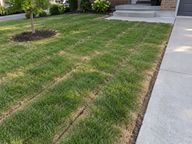
Yes, you can lay sod in October in Ontario. Sod can go down any time the ground isn't frozen or snow-covered, roughly April to November around the GTA. Spring and early fall are easiest. Markham's average first frost is around October 10, but October highs still average 14 °C, so aim to finish by late October. The City of Toronto's sodding spec treats November 1 to April 30 as the winter dormant period.
Key numbers
- Average first fall frost (Markham)
- October 10
- October average high / low
- 14.1 / 3.6 °C
- Frost nights in November
- About 18 (17.8 average)
- Toronto spec winter dormant period
- November 1 to April 30
- Lay sod after cutting
- Within 36 hours (12 in hot weather)
In this guide
You can lay sod in October in Ontario, and around Markham it’s one of the better months for it, as long as you finish well before the ground freezes. Sod is more forgiving about timing than grass seed, because it arrives as grown grass and only has to root into the soil underneath.
Seed has to sprout first, and a cold snap can stop it.
So the date on the calendar matters less than two things: whether the ground is workable, and whether the sod gets enough mild days afterwards to grab hold.
If you’d rather hand the job off, this is the work we do on our sod installation and lawn repair jobs around Markham.
Can you lay sod in October in Ontario?
Yes, as long as you don’t leave it to the last week. Iowa State Extension says spring and fall are the preferable sodding times for cool-season grasses, and that sod can be established whenever the ground isn’t frozen or snow-covered.
That applies here because Ontario sod is mostly Kentucky bluegrass. Ontario’s agriculture ministry calls it the province’s predominant turfgrass, and it’s a cool-season grass.
Environment Canada’s 1981–2010 climate normals for the Buttonville station in Markham show a typical October: highs of about 14 °C, lows of about 3.6 °C and roughly 67 mm of rain. The average first fall frost there is October 10.
A frosty morning isn’t the same as frozen ground, though. In most Octobers the soil stays workable.
The real limit is time. Colorado State University Extension points out that sod planted late in the fall has little time to grow a substantial root system.
Sod laid on October 5 gets a lot more growing time before winter than sod laid on October 30. If the end of the month is your only option, it can still work, but expect it to finish rooting in spring.
When is the best time to lay sod in Ontario?
Late August through September is the easiest window around the GTA, with late April through early June a close second. Here’s a typical year at Buttonville, from Environment Canada’s climate normals. “Frost nights” means the average number of nights at or below 0 °C.
Scroll sideways to see the whole table.
| Month | Average high / low | Frost nights | For new sod |
|---|---|---|---|
| April | 12.1 / 1.2 °C | 12.5 | Fine once the soil dries out |
| May | 19.1 / 6.8 °C | 1.5 | Very good |
| June | 24.6 / 12.6 °C | 0 | Good, watering picks up |
| July | 27.1 / 15.2 °C | 0 | Hardest month, daily watering |
| August | 26.0 / 14.3 °C | 0 | Hot early, better late |
| September | 21.5 / 9.9 °C | 0.4 | Best month |
| October | 14.1 / 3.6 °C | 7.0 | Good, earlier is better |
| November | 7.2 / −1.1 °C | 17.8 | Risky, little rooting before winter |
September is still warm enough for quick rooting, but no longer hot enough to bake fresh sod. It also gets about 82 mm of rain at Buttonville, one of the wetter months of the year, which takes some of the watering off your hands.
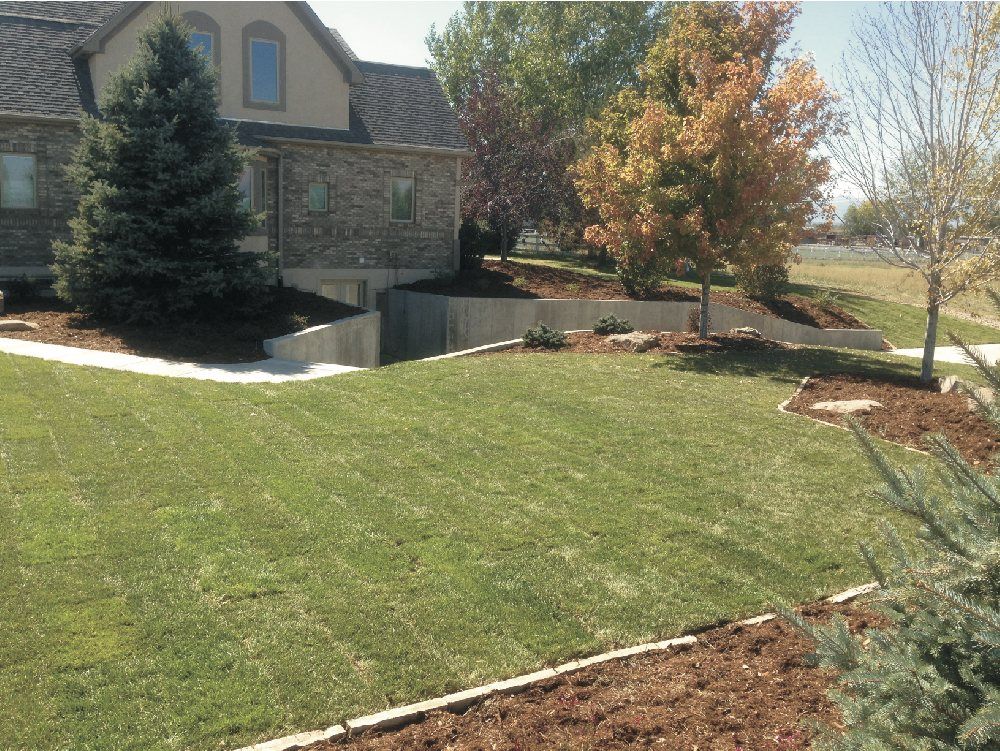
Is spring a good time to lay sod?
Spring works well once the ground has thawed and dried out. Buttonville’s average last spring frost is May 5, but in April the bigger problem is wet soil.
Both the City of Toronto and the City of Brampton sodding specs rule out sodding in excessively wet conditions. Working soggy soil packs it down and leaves ruts, and you end up with a lumpy lawn.
Good to know
To check, squeeze a handful of soil. If it crumbles, you’re good. If it holds a wet ball or water seeps out, give it a few more dry days.
Spring sod also needs its roots down before July. A lawn laid in May goes into summer in better shape than one laid in mid-June.
Can you lay sod in summer?
You can, but it takes a lot more water. Penn State Extension says sod can go down almost any time of year if you can irrigate it, but sod laid in hot, dry months needs more frequent watering and takes longer to establish.
Buttonville averages about 7 days over 30 °C in July. On days like that the edges and seams dry out first, so a missed watering shows quickly.
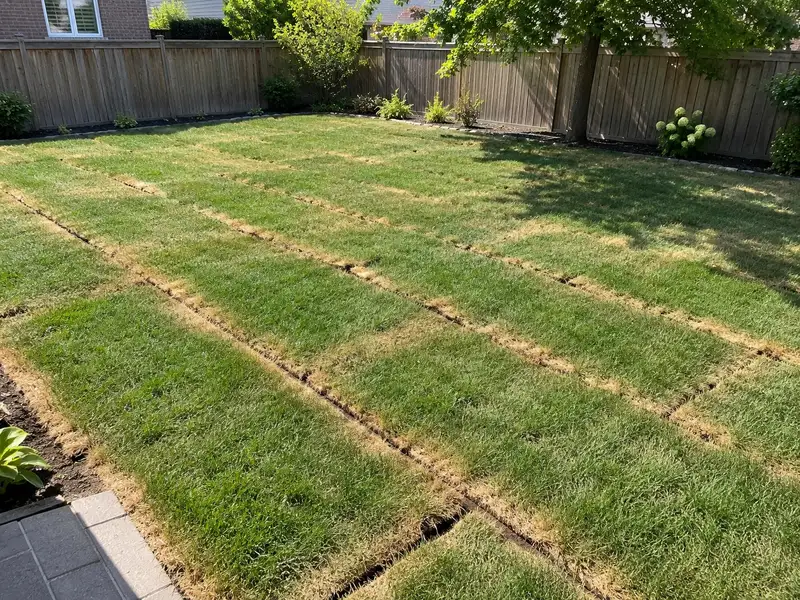
Watering bylaws come into it too. York Region’s outdoor water-use page lists Markham’s bylaw as running June 1 to September 30, with a grace period for new sod and seed:
Scroll sideways to see the whole table.
| Town | Grace period for new sod |
|---|---|
| Markham | Two months |
| Richmond Hill | One month |
| Vaughan | One month |
| Stouffville | One month |
Check your town’s rules before you book a July install.
How late in the fall can you lay sod?
Until the ground freezes, but plan to finish by late October. The City of Toronto’s sodding spec treats November 1 to April 30 as the winter dormant period.
On City jobs, the contractor’s 60-day care period for new sod pauses for the winter and picks up again in spring.
November at Buttonville averages a high of 7.2 °C, a low of −1.1 °C and almost 18 nights at or below freezing. Sod laid then can still take, but it won’t knit much before winter, so most of its rooting happens the next spring.
Watch out
If you do lay it late, keep foot traffic off it and hold off on fertilizer. Toronto’s spec says to postpone fertilizing until the following spring if it would fall within four weeks of the end of the growing season.
Check supply too. Ask your supplier how late in the season they’ll still be cutting fresh rolls before you plan a late job.
What mistakes kill sod laid at the wrong time?
New sod rarely fails because of the sod. It usually went down at the wrong moment or got the wrong care afterwards. These are the usual causes:
- Laying it on frozen or waterlogged soil. Both city specs above rule this out.
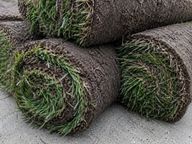
- Letting the rolls sit. Toronto’s spec says to lay sod within 36 hours of cutting. In hot weather the window is shorter: Ontario’s agriculture ministry says sod has to be laid within 12 hours or heat in the stack kills it.
- Watering only the grass. Toronto’s spec calls for the first watering to soak the top 75 mm of soil, then keeping the soil under the sod moist 75 to 100 mm down.
- Stopping watering in the fall because it feels cool. A dry, windy October week can still dry out new sod.
- Fertilizing late-season sod. Toronto’s spec pushes that feeding to the next spring if it would land within four weeks of the end of the growing season.
- Rushing spring sod onto soil that’s still soaked from snowmelt.
Ground prep matters as much as the date. Our guide on how to prepare your yard for sod covers grading, topsoil and levelling.
For the first few weeks after it’s down, see how often to water new sod. If you’re doing other fall lawn work, our fall lawn care guide covers overseeding and patch repair.
Should you lay sod yourself or hire someone?
A small patch is a reasonable weekend job in spring or fall:
- Cut out the dead area.
- Loosen and level the soil.
- Lay the sod tight to the old lawn.
- Roll it and water it.
A whole front or back yard is a bigger job. The old turf has to come out, the grade usually needs fixing, and every roll should go down the day it arrives.
Late in the season the days are short and dry spells between rain are short too, so it helps to get it all done in one day.
For a sense of the money first, our sod installation cost guide explains what drives the price. If you’d like us to look at your lawn, text us a photo or call (437) 684-2535. You can also ask for a free quote through our sod installation page.
Other questions people ask
Can you lay sod in November in Ontario?
Sometimes, but it's a gamble. Iowa State Extension says sod can be established whenever the ground isn't frozen or snow-covered, and early November often qualifies. The problem is what comes next. Buttonville in Markham averages almost 18 nights at or below 0 °C in November, so the sod gets very little rooting time before winter. Expect it to finish rooting in spring, and keep heavy use off it until then.
Is it better to lay sod in spring or fall?
Both work. Iowa State Extension names spring and fall as the preferable sodding times for cool-season grasses, and most Ontario sod is Kentucky bluegrass, a cool-season grass. Early fall has the edge in most GTA yards, because the soil is still warm from summer and you're not watering through July heat. Spring is fine too, as long as the soil has dried out enough to work without turning to mud.
How often should I water sod laid in the fall?
Less often than in summer, but don't stop. The goal is the same in every season: keep the soil under the sod moist, not just the grass. The City of Toronto's sodding spec asks for soil kept moist 75 to 100 mm down. In cool October weather the soil dries more slowly, so check it every day at first and water when it starts to dry, then ease off as the roots take hold. Lift a corner to check.
Can you lay sod on frozen ground?
No. The roots have nothing to grow into, and frozen clods leave the sod sitting on air pockets. Both the City of Toronto and the City of Brampton specs say sodding at freezing temperatures or over frozen soil isn't acceptable. If the top few centimetres are crunchy in the morning but thaw by noon, wait for the thaw and lay it in the afternoon.
Sources
- Iowa State University Extension: Sodding a New Lawn (HORT 3033)
- Penn State Extension: Lawn Management through the Seasons (updated April 2025)
- Environment and Climate Change Canada: Canadian Climate Normals 1981–2010, Toronto Buttonville A
- City of Toronto: TS 5.00 Construction Specification for Sodding (September 2017)
- City of Brampton: Landscape Standards, Section 02938 Sodding
- York Region: Outdoor Water-Use Bylaws
- Ontario Ministry of Agriculture, Food and Rural Affairs: Sod production
- Purdue University Extension: Kentucky bluegrass (cool-season grass)
- Colorado State University Extension PlantTalk: Fall planting of sod (1539)
Related guides and service
- How often to water new sod, and how long it takes to root In Ontario, start watering new sod as soon as it's laid (about half an inch in the first 10–15 minutes), then water every morning for the first two weeks, with a light afternoon watering on hot days.
- How to prepare your yard for sod To prepare a yard for sod in Ontario, take out the old grass and weeds (the province bans glyphosate for cosmetic lawn use), grade the soil to fall away from the house about 1 foot per 50 feet, loosen it 4–6 inches deep…
- Sod installation cost in Ontario: what you pay for, and why quotes vary HomeStars' 2026 price guide puts sod installation in Ontario at about $1.50 to $3.00 per square foot.
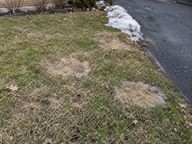
- How to fix brown spots and bare patches in your lawn: snow mould, dog spots, salt and drought Most brown spots on lawns in Ontario come from snow mould after the melt, road salt along driveways, dog urine, summer drought, hairy chinch bugs in July and August, or grubs in fall.