Fall lawn care in Ontario: overseeding, aeration and repair
Short answer
In Ontario, fall lawn work runs from late August into November. Overseed thin areas from mid-August to mid-September, with early September the sweet spot, ideally right after core aerating damp soil. Feed with a slow-release fertilizer in September or October. Keep mowing at about 7.5 cm until the grass stops growing, and don't let leaves sit on the lawn over winter. In Markham, curbside leaf pickup ends October 30 in 2026.
Key numbers
- Overseeding window
- Mid-August to mid-September
- Mow before seeding to
- 4–5 cm (1½–2 in)
- Core aeration
- 20–40 holes per sq ft
- Fall mowing height
- About 7.5 cm
- Feed new grass after
- About six weeks after germination
In this guide
Fall is when a tired GTA lawn gets fixed, and most of fall lawn care in Ontario comes down to timing. From late August to mid-September you overseed the thin spots, ideally after core aerating, while the soil is still warm. Through September and October you feed it with a slow-release fertilizer and keep mowing high.
Before snow, get the leaves off or chop them in. Miss the seeding window and the repair waits for spring, or for sod.
Most of this is doable yourself. If you’d rather hand off the mowing, we do lawn mowing and lawn care across Markham and nearby.
Why is fall the best time for lawn repair?
Fall suits lawn repair because Ontario lawns are cool-season grasses (Kentucky bluegrass, fescues and perennial ryegrass). They grow fastest when days are warm and nights are cool.
Iowa State University Extension puts it simply: seed germinates fast in the warm soil of late summer, warm days and cool nights push the young grass along, and fewer weed seeds sprout than in spring. OMAFRA’s turf guide prefers mid-August to mid-September for the same reasons.
Spring seeding works too, but the new grass then faces its first summer while it’s still young. Penn State Extension points out that late-summer seeding gives the grass two cool growing seasons, fall and spring, before any heat stress.
Fall lawn care in Ontario: what to do and when
The dates come from Ontario sources and from university extension services working with the same grasses.
Scroll sideways to see the whole table.
| Job | When (Markham) | Numbers that matter | Source |
|---|---|---|---|
| Grub nematodes (if you had damage) | Mid to late August, early September at the latest | Water before and after, apply on a cloudy day or in the evening | OMAFRA turf specialist via Landscape Ontario (2009) |
| Core aeration | Late August to September, a few days after rain | 20–40 holes per sq ft; the tines need moist soil to pull plugs | Health Canada, Iowa State, Illinois and Penn State Extension |
| Overseeding | Mid-August to mid-September; end of September at the latest | Mow to 4–5 cm (1½–2 in) first; water at least once a day after | OMAFRA, City of Windsor, Iowa State |
| Top-dressing | Right after aerating and seeding | 6–12 mm (¼–½ in) of good topsoil and compost | Landscape Ontario, City of Windsor |
| Fertilizer | September and October, or a late feed in November | Slow-release; phosphorus-free on an established lawn | City of Windsor, Landscape Ontario |
| Mowing | Until the grass stops growing | About 7.5 cm tall; never take off more than a third at once | TRCA, Landscape Ontario |
| Leaves | October and November, before snow | Mowers can mulch up to about 15 cm (6 in) of leaves at a time | Michigan State research via Virginia Cooperative Extension |
How to overseed a thin lawn
Seed needs to touch soil, not sit on top of grass and thatch. The order that works:
- Mow the lawn short, to about 4–5 cm (1½–2 inches), so the existing grass competes less with the new seed (Iowa State’s advice).
- Core aerate if the soil is compacted. Iowa State suggests going over the lawn three or four times until there are 20 to 40 holes per square foot. Illinois Extension says to do it a few days after rain, when the soil is damp, and to leave the cores to break down.
- Spread the seed with a spreader. The TRCA suggests hardy blends of perennial ryegrass and fescues, labelled endophyte-enhanced. Landscape Ontario points to red fescue for shade and dry spots.
- Top-dress with a thin layer of good topsoil and compost. Landscape Ontario gives ¼ to ½ inch.
- Keep the seedbed moist. Iowa State says light, frequent watering is needed, usually at least once a day, until the new grass is up.
- Keep mowing at the low height while the seedlings establish, then raise the deck gradually over the following weeks.
Good to know
Small bare patches can be done by hand. Illinois Extension suggests raking the surface loose and mixing grass seed with a 50/50 blend of topsoil and compost, at about one part seed to three parts mix. Firm it down and keep it moist.
When should you aerate your lawn in Ontario?
Aerate in late summer or early fall when the soil is compacted, ideally just before you overseed or feed. Health Canada says late summer is best, followed by top-dressing or overseeding.
The TRCA recommends fall aeration right before an application of compost or organic fertilizer. Landscape Ontario says it lets water reach deeper and produces deeper roots.
A lawn usually needs it when:
- water sits or runs off instead of soaking in
- the grass is worn thin where people walk
- weeds that like hard ground start moving in (OMAFRA’s turf guide names knotweed and annual bluegrass as weeds that thrive in compacted soil)
Use a hollow-tine (core) aerator that pulls out plugs; OMAFRA prefers those to solid tines. The TRCA suggests renting one or hiring the job out.
Check the thatch too. Landscape Ontario says a healthy lawn has about 1 cm (½ inch) of thatch and that more than 2.5 cm is too much. Core aerating breaks thatch up as well, OMAFRA notes, so in fall that’s usually enough.
Watch out
Skip power raking late in the season. Penn State Extension advises against removing thatch in late fall, and the City of Windsor’s lawn calendar warns that fall dethatching leaves the turf open to disease.
When should you fertilize your lawn in fall?
Any time from September to November works, as long as the product is slow-release. A fall feeding builds roots through fall and spring and gives you an earlier green-up, according to Landscape Ontario.
The sources differ a little on timing:
Scroll sideways to see the whole table.
| Source | When | Product |
|---|---|---|
| City of Windsor | September and October | Slow-release mineral or organic |
| Landscape Ontario | Late feed (November in its calendar), when top growth has stopped but roots are still active | Phosphorus-free on an established lawn (its Lawn Care Sector Group) |
Either timing is fine, so the product and the rate on the bag matter more. Landscape Ontario’s Lawn Care Sector Group recommends phosphorus-free fertilizer because rooted grass can find the phosphorus already in the soil.
If you overseeded, let the new grass come up before feeding. Iowa State suggests waiting about six weeks after germination.
What to do with leaves, and when to stop mowing
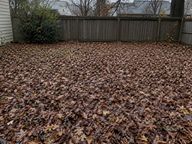
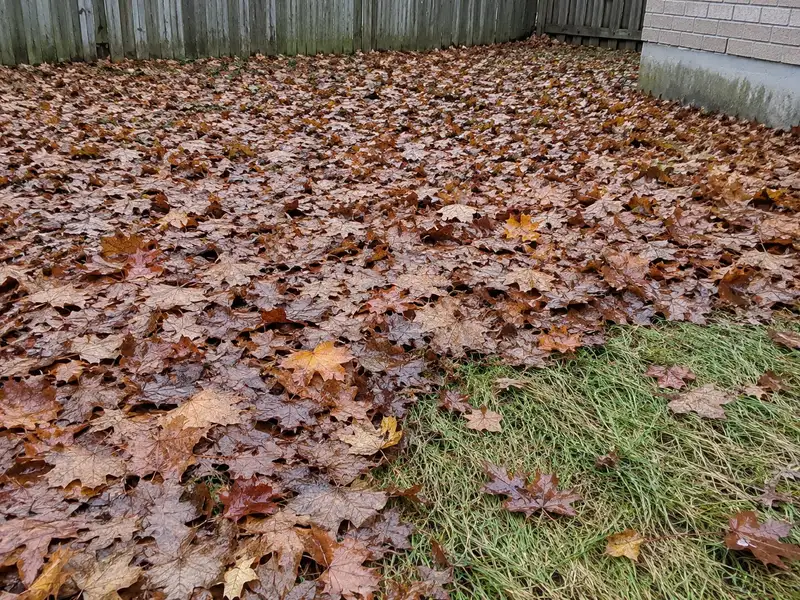
Don’t let leaves sit on new seed or thin grass in a thick layer. They block the light and hold moisture against the grass, and Virginia Cooperative Extension notes that the trapped moisture raises the risk of turf disease.
On a freshly overseeded patch, blow them off gently every few days so the seedlings get light. Elsewhere you can chop them in with the mower or bag them. Our fall cleanup checklist covers how much you can mulch in and when Markham’s last pickup is.
Keep mowing as long as the grass grows. The TRCA recommends a cutting height of about 7.5 cm, and Landscape Ontario says never to take off more than a third of the blade in one cut.
Common fall lawn mistakes
- Seeding too late. OMAFRA lists the end of September as the last regular seeding date. Penn State Extension doesn’t suggest seeding after mid-October even in most of Pennsylvania, which is south of us. Later than that, lay sod or do a dormant seeding that sits until spring.
- Following American weed-killer advice. A lot of US lawn advice says fall is the time to spray broadleaf weeds. In Ontario, the cosmetic pesticide ban means homeowners can’t use products containing 2,4-D or glyphosate on lawns; only ingredients on the province’s Allowable List are permitted. Our guide to lawn weeds under Ontario’s pesticide ban covers what you can use instead.
- Putting corn gluten meal on new seed. Landscape Ontario lists it as a pre-emergent, which means it stops seeds from germinating. Iowa State University research found it reduced grass seed germination too.
- Treating grubs with nematodes in spring. OMAFRA’s turf specialist was blunt about it in her 2009 column: don’t bother. Her window was mid to late August.
- Aerating bone-dry soil. Penn State Extension notes the tines need enough moisture to get in and pull the plugs. Wait a few days after a good rain.
When is it worth calling a pro?
A small, thin lawn is a good weekend job to do yourself. It’s worth getting help when:
- large parts of the lawn are dead rather than thin
- grubs have rolled up whole sections
- the ground is uneven or holds water
- you’ve seeded two falls in a row and it still hasn’t taken
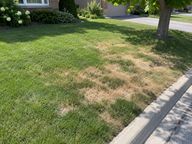
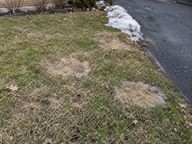
Those usually need soil and grade work, and often new sod, because seed can’t fix a drainage problem. If you’re not sure what killed a patch, our guide to fixing brown and bare patches helps you tell grubs, salt, dog spots and drought apart.
We work across Markham and nearby. Our lawn care service covers regular mowing, and our fall cleanups take care of the leaves.
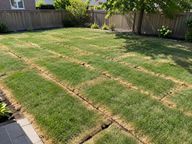
If a patch is past saving with seed, we can cut it out and lay new sod. Our guides on the best time to lay sod in Ontario and watering new sod explain what’s involved.
For a free quote, call (437) 684-2535 or text us a couple of photos of the lawn. For the rest of the year, see our Ontario lawn care calendar.
Other questions people ask
Is it a good time to seed my lawn in fall in Ontario?
Late summer and early fall are the best time of year for it. Ontario's agriculture ministry (OMAFRA) prefers mid-August to mid-September and lists the end of September as the last regular seeding date. The City of Windsor's lawn calendar says early September is best, when temperatures are in the high teens. Warm soil gets the seed up quickly, and fewer weeds sprout than in spring. After September, sod or a dormant seeding is the safer choice.
When should I fertilize my lawn in fall in Ontario?
Sometime between September and November, using a slow-release product. The City of Windsor recommends September and October. Landscape Ontario prefers a late-season feeding (its calendar puts it in November), when top growth has stopped but the roots are still active, and its Lawn Care Sector Group recommends a phosphorus-free fertilizer on established turf. If you overseeded, wait for the new grass to come up before feeding it.
What fertilizer should I put down in October?
A slow-release lawn fertilizer, mineral or organic, made for turf. On an established lawn Landscape Ontario recommends a phosphorus-free product, since the roots can find the phosphorus already in the soil. The Toronto and Region Conservation Authority suggests organic fertilizers in late summer or early fall because they won't burn the grass. Follow the rate on the bag and use a spreader so you don't double up on the passes.
Should I dethatch my lawn in the fall?
Usually not in late fall. Landscape Ontario says a healthy lawn has about 1 cm (½ inch) of thatch and that more than 2.5 cm is too much. If yours is under that, core aeration breaks thatch up enough, as OMAFRA notes. Penn State Extension advises against removing thatch in late fall, and the City of Windsor's lawn calendar warns that fall dethatching leaves the turf open to disease.
Sources
- Landscape Ontario: How to maintain a healthy lawn in seven simple steps
- Toronto and Region Conservation Authority: Lawn Care
- City of Windsor: Growing a Healthy Lawn (lawn care calendar)
- Iowa State University Extension: Overseeding a lawn
- University of Illinois Extension: Five fall tips for cool-season lawn care
- Virginia Cooperative Extension: "Leave" them alone, lawn leaf management
- Landscape Ontario: A watershed moment in turf industry (2009 column by OMAFRA's turf specialist on grubs and nematodes)
- Government of Ontario: Pesticides (home lawns and gardens)
- City of Markham: Yard material collection
- Ontario Ministry of Agriculture, Food and Rural Affairs: Integrated Pest Management for Turf (Publication 845)
- Health Canada: Maintaining a healthy lawn
- Penn State Extension: Lawn management through the seasons
- Iowa State University Extension: How to use corn gluten meal as a herbicide
Related guides and service
- Ontario lawn maintenance schedule: what to do each month A lawn maintenance schedule for Ontario and the GTA runs from April to November.
- How to fix brown spots and bare patches in your lawn: snow mould, dog spots, salt and drought Most brown spots on lawns in Ontario come from snow mould after the melt, road salt along driveways, dog urine, summer drought, hairy chinch bugs in July and August, or grubs in fall.
- Fall cleanup checklist: what to do before winter A fall cleanup in Ontario means getting the leaves off the lawn and hard surfaces, clearing out the beds, cutting back only diseased or collapsed plants, mowing one last time to about 5 cm (2 inches), and shutting off…
- Best time to lay sod in Ontario (and can you lay sod in October?) Yes, you can lay sod in October in Ontario. Sod can go down any time the ground isn't frozen or snow-covered, roughly April to November around the GTA.