Lawn grubs in Ontario: signs, skunk and raccoon damage, and what you can legally use
Short answer
Most lawn grubs in Ontario are European chafer larvae. They eat grass roots from late September into November and again in spring, so dead turf lifts like a carpet and skunks and raccoons dig it up. OMAFRA says dead patches show at about 5 to 10 grubs per square foot. Chemical grub killers aren't on Ontario's Allowable List, so homeowners use beneficial nematodes in mid to late August or a Bt galleriae product, then repair the lawn.
Key numbers
- Count that causes damage
- 5–10 per 0.1 m² (about 1 sq ft)
- Main damage season
- Late September into November
- Nematode window
- Mid to late August
- Latest for nematodes
- Early September
- Mowing height in summer
- 6 to 8 cm (2.5 to 3 inches)
In this guide
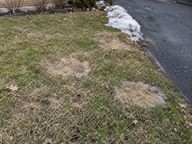
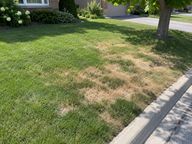
Lawn grubs are beetle larvae that eat grass roots. In southern Ontario the usual one is the European chafer, and its grubs do most of their damage from late September into November. The grass wilts, turns brown and lifts off the soil like a loose rug.
Skunks and raccoons then rip it up to get at them.
Ontario’s cosmetic pesticide ban rules out the usual chemical grub killers on home lawns. You can still use beneficial nematodes or a bacterial grub product, and grow a thicker lawn.
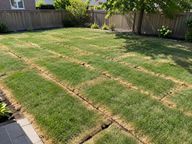
Then there’s the repair. If whole sections have been rolled back, new sod is quicker than seed. That’s what our sod installation and lawn repair service covers in Markham and nearby.
How do you check for lawn grubs?
Lift the turf and count them. Cut three sides of a square about 30 cm (1 foot) across in a brown patch, fold it back and look through the top 10 cm or so of soil.
Repeat in a few spots, including the green edge of the damage.
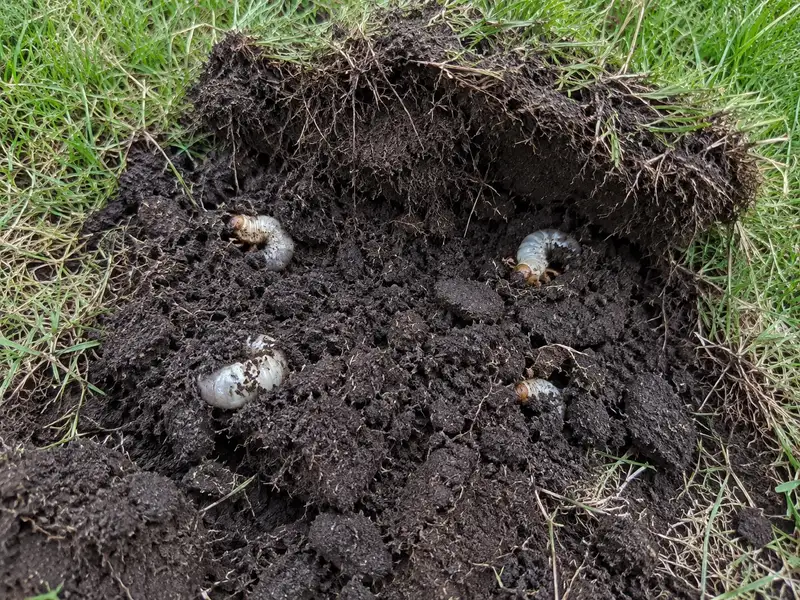
Grubs are white and C-shaped with a tan or brown head and six legs. OMAFRA says they’re 3 to 4 mm long when they hatch and up to 2 to 4 cm when grown, depending on the species.
How many is too many:
Scroll sideways to see the whole table.
| Source | Count that causes damage |
|---|---|
| OMAFRA factsheet | 5–10 per 0.1 m² (about 1 sq ft) |
| Health Canada | 8–10 per sq ft |
| OMAFRA Publication 845, European chafer | 5–10 per 0.1 m² on lawns that aren’t watered, more than 20 on watered lawns |
A watered, actively growing lawn has more roots, so it can lose more of them before it shows.
OMAFRA lists two other signs: flocks of starlings or blackbirds feeding on the lawn, and skunks digging it up in spring and fall.
Is it grubs, chinch bugs or a dry spell?
Pull on the dead grass. If it comes up with no roots, it’s grubs. If it stays put, think chinch bugs or drought.
OMAFRA notes that both pests get mistaken for drought, and the timing helps tell them apart.
Scroll sideways to see the whole table.
| Sign | Grubs | Chinch bugs | Drought |
|---|---|---|---|
| When it shows | September to November, and spring | Mid-July to mid-August | Any hot, dry stretch |
| Pull test | Turf lifts like a carpet | Dead grass stays rooted | Grass stays rooted |
| Pattern | Irregular patches that grow through fall | Small sunken patches in sunny spots, often near hedges and beds | Broad browning in the sunniest, driest spots |
| Animals digging | Common | No | No |
Hairy chinch bugs suck sap from the grass at the crown instead of eating roots. OMAFRA says they do less harm on watered lawns, and endophyte-enhanced ryegrass and fescue resist them.
Our Ontario lawn care calendar shows when each pest turns up through the year.
Why are skunks and raccoons digging up my lawn?
They’re eating the grubs. The City of Toronto says skunks dig small round holes and roll up large chunks of sod to reach them, especially after rain, when the grubs sit close to the surface.
OMAFRA lists raccoons and starlings feeding on grubs as well.
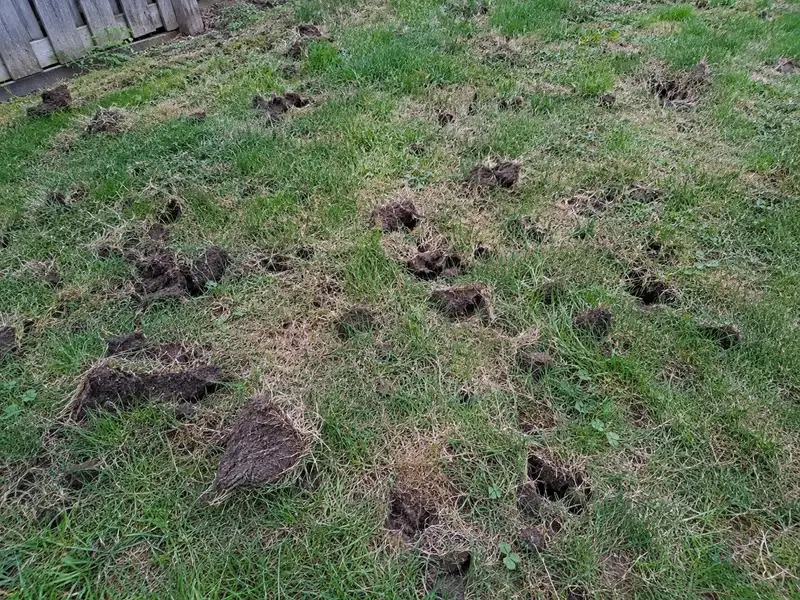
OMAFRA’s factsheet points out that the digging usually does more harm than the grubs themselves, and it treats skunk damage as a sign of a grub infestation.
Trapping one skunk doesn’t fix much while the grubs are still there for the next animal. Toronto suggests soap flakes watered into the lawn and lighting the problem area, with natural lawn care to deal with the grubs.
Good to know
Don’t throw out turf that’s been rolled back. OMAFRA says it can often be saved: put it back in place, tamp or roll it down and water it.
What is the European chafer life cycle in Ontario?
It takes one year, and the grubs feed in fall and again in spring. This is the timeline OMAFRA gives:
- Mid-June to mid-July: adult beetles come out of the lawn at dusk and swarm around trees to mate. This happens about when catalpas and hybrid tea roses are in full bloom.
- Late June and July: females lay eggs in the soil, which hatch in about two weeks. A dry July and August can kill the eggs, because they need soil moisture to hatch.
- August: young grubs feed near the surface. This is the window for nematodes.
- End of September: most grubs are full size, and damage gets serious.
- October to November: feeding carries on until frost drives them down in November or December.
- Spring: they come back up as soon as the frost leaves, even before the snow is gone, and feed until mid to late May, then pupate.
June beetle grubs take three years, but OMAFRA calls the European chafer the most common lawn grub in southern Ontario.
How do you get rid of grubs in your lawn legally in Ontario?
Use beneficial nematodes or a Bt galleriae grub product, plus good lawn care.
Under the Pesticides Act and Ontario Regulation 63/09, you can only use a pesticide on a lawn if its active ingredients are on the province’s Allowable List. There are a few health and safety exceptions (wasps, for example).
The current list is version 5, effective November 28, 2022. Chemical grub insecticide ingredients, such as chlorantraniliprole and imidacloprid, aren’t on it.
Scroll sideways to see the whole table.
| Option | Allowed on Ontario lawns? | What it is |
|---|---|---|
| Beneficial nematodes | Yes, not regulated as a pesticide | Microscopic worms that hunt grubs in the soil |
| Bt galleriae (strain SDS-502) | Yes, on the Allowable List | A bacterium that works once the grubs eat it |
| Imidacloprid, chlorantraniliprole | No, not on the Allowable List | Chemical grub insecticides |
OMAFRA’s turf publication notes that nematodes, as living organisms, aren’t regulated by the Pesticides Act or Regulation 63/09. Landscape Ontario says garden centres sell them.
Maine’s state guidance says the species Heterorhabditis bacteriophora works best on European chafer and Japanese beetle grubs, because it moves down through the soil looking for them.
Health Canada registered Bacillus thuringiensis galleriae, strain SDS-502, in 2019. Products made with it are sold in Canada and labelled for European chafer and Japanese beetle grubs. Follow the label for rate and timing.
When should you apply nematodes for grubs?
Mid to late August, and no later than early September. That’s the window Pam Charbonneau, OMAFRA’s turf specialist at the time, gave in a 2009 Landscape Ontario column.
Grubs that hatched in mid to late July are still young then and feeding near the surface.
On spring treatment with nematodes she was blunt: don’t bother. OMAFRA’s turf publication notes the grubs spend the winter full grown and feed only briefly in spring before they pupate.
To give the nematodes a fair chance:
- Buy them close to the day you’ll use them and keep them in the fridge. Maine’s guidance says they last 2 to 3 weeks there.
- Water the lawn first. If the soil is dry, Maine suggests at least 13 mm (0.5 inch) of water beforehand.
- Apply at dusk, on a heavily overcast day or while it’s raining.
- Mix and spray as the package says, keep the mix stirred, and take any fine screens out of the sprayer.
- Water again right after, about 6 mm (0.25 inch), to wash them off the blades and into the soil.
- Keep the soil moist for at least two weeks.
Watch out
Strong sunlight kills nematodes, and so does dry soil. Put them down on a sunny afternoon with no watering after and you can lose the whole package.
Count again in late September to see whether it worked.
Can a lawn recover from grubs, or should you resod?
Grass that’s thin but still rooted can come back. Turf that lifts like a carpet won’t, because the roots are gone.
OMAFRA says a grub-damaged lawn can be reseeded or resodded, and the best time is spring, after most of the feeding is done.
Scroll sideways to see the whole table.
| Seed | Sod | |
|---|---|---|
| Best for | Small patches | Bigger areas and spots the animals have torn up |
| Timing | Spring, after most of the feeding | Spring, or spot sodding any time in the season |
| Catch | Must stay moist until it’s established | Must be watered until it roots |
To lay sod, rake out the dead turf and loosen and level the soil so the new sod sits flush with the old lawn. Lay it and keep it wet until it roots.
Our guides on the best time to lay sod in Ontario and watering new sod cover the timing and aftercare.
If the damage showed up this fall, fall lawn care in Ontario explains what’s still worth doing before winter.
How do you make a lawn less attractive to grubs?
Grow thicker grass with deeper roots. Health Canada suggests mowing at 6 to 8 cm (2.5 to 3 inches) in summer, because beetles prefer to lay eggs in short lawns.
It also recommends watering no more than once a week, deeply enough to put down at least 2 cm, and leaving clippings on the lawn. OMAFRA adds aeration and balanced feeding.
When you reseed, Health Canada suggests fescues and ryegrasses that carry endophytes, a fungus that lives inside the grass and makes it less appealing to some insects.
Common mistakes
- Putting nematodes down in spring or October, outside the mid-August to early September window.
- Applying nematodes on a sunny afternoon or to dry soil, then not watering after.
- Laying new sod over a patch without counting grubs first. Check the soil before you replace anything.
- Treating a lawn that has two or three grubs per square foot. That’s normal.
- Calling dead grass grub damage without the pull test. Chinch bugs and drought need a different fix.
When it’s worth calling someone
Counting grubs and putting down nematodes is a fair job to do yourself. Get help when large parts of the lawn are dead or the animals have left the ground lumpy.
Those lawns usually need the dead turf cut out, the soil levelled and new sod laid. That’s what our lawn repair and sod installation service covers. For mowing and care through the season, see our lawn care service.
Call (437) 684-2535 or text us a couple of photos of the damage and we’ll come by for a free quote.
Other questions people ask
Can a lawn recover from grubs?
Often, yes. If the grass is thin but still rooted, it may thicken up again with deep watering and feeding once the grubs stop feeding. Turf that peels up like a carpet has lost its roots and won't recover on its own. OMAFRA's advice is to reseed or resod those areas, ideally in spring after most of the feeding is over. Spot sodding works any time in the season if you can keep it watered.
Is September too late for grub control?
For nematodes, early September is about the limit. OMAFRA's turf specialist, writing for Landscape Ontario in 2009, gave mid to late August as the ideal time for nematodes and early September as the latest. By the end of September most European chafer grubs are full size and doing their worst damage. If you find them in October, repair the lawn and plan to treat next August.
Should I kill grubs in my lawn?
Only if there are enough to hurt it. Grubs live in most lawns. Fold back a square foot of turf in a few spots and count. OMAFRA puts the damage level at about 5 to 10 grubs in that area on a lawn that isn't watered, and Health Canada says 8 to 10 per square foot can damage a lawn. A couple of grubs is normal and not worth treating.
What is the best thing to kill lawn grubs in Ontario?
Beneficial nematodes are the usual choice. Ontario's cosmetic pesticide ban only allows products whose active ingredients are on the province's Allowable List, and chemical grub insecticides such as imidacloprid and chlorantraniliprole aren't on it. Nematodes are living organisms, so OMAFRA notes the Pesticides Act doesn't regulate them. Apply them to moist soil in mid to late August. A bacterial grub product made from Bacillus thuringiensis galleriae (strain SDS-502) is also on the list.
How do I stop skunks digging up my lawn?
Get rid of the grubs, because that's what they're after. The City of Toronto says skunks dig small round holes and roll back sod to eat grubs, especially after rain. It suggests natural lawn care to deal with the grubs, plus soap flakes watered into the lawn and lighting the problem area. Once the grub count drops, the digging usually stops.
Sources
- OMAFRA: Grubs in Lawns, Factsheet 08-023W by P. Charbonneau and M.K. Sears (copy hosted by Maine YardScaping; the ontario.ca page is no longer online)
- OMAFRA: Integrated Pest Management for Turf, Publication 845
- Health Canada: White grubs
- Government of Ontario: Pesticides for home lawns and gardens
- Government of Ontario: Using pesticides in Ontario (Allowable List, version 5)
- Ontario Data Catalogue: List of Active Ingredients Authorized for Cosmetic Use (Allowable List)
- Health Canada PMRA: Registration decision RD2019-01, Bacillus thuringiensis subsp. galleriae strain SDS-502
- Scotts Canada: Grub B Gon MAX product page (Bt galleriae SDS-502, target grubs and timing)
- Landscape Ontario: A watershed moment in turf industry (2009 column by OMAFRA's turf specialist on grubs and nematodes)
- Landscape Ontario: How do I get rid of grubs in my lawn?
- Maine Department of Agriculture (YardScaping): Using beneficial nematodes for grub control
- City of Toronto: Skunks
Related guides and service
- How to fix brown spots and bare patches in your lawn: snow mould, dog spots, salt and drought Most brown spots on lawns in Ontario come from snow mould after the melt, road salt along driveways, dog urine, summer drought, hairy chinch bugs in July and August, or grubs in fall.
- Fall lawn care in Ontario: overseeding, aeration and repair In Ontario, fall lawn work runs from late August into November. Overseed thin areas from mid-August to mid-September, with early September the sweet spot, ideally right after core aerating damp soil.
- Ontario lawn maintenance schedule: what to do each month A lawn maintenance schedule for Ontario and the GTA runs from April to November.
- Best time to lay sod in Ontario (and can you lay sod in October?) Yes, you can lay sod in October in Ontario. Sod can go down any time the ground isn't frozen or snow-covered, roughly April to November around the GTA.