Spring cleanup checklist for Ontario yards
Short answer
Do a spring yard cleanup in Ontario in two rounds. Once the snow is gone and the ground is firm, usually in April in the GTA, pick up branches, sweep hard surfaces, rake the lawn lightly and prune shrubs. Leave the beds and hollow stems until temperatures, overnight lows included, stay well above 10°C for at least 10 days, as the City of Toronto advises. Then clear the beds, recut the edges and mulch 5–8 cm (2–3 inches) deep.
Key numbers
- Clear the beds after
- 10+ days well above 10°C, lows included
- Cut perennial stems to
- About 30 cm, not to the ground
- Mulch depth
- 5–8 cm (2–3 in)
- First mow height
- About 7.5 cm (3 in)
- Markham bag or bundle limit
- Under 18 kg each
In this guide
A spring cleanup in the GTA goes better as two rounds a few weeks apart. Branches, driveways, walkways, the lawn and shrub pruning can start once the snow has melted and the ground is firm, often in April. The garden beds wait for steady warmth, because insects are still overwintering in last year’s stems.
If you’d rather hand the whole thing off, this is what our spring and fall cleanups cover across Markham and nearby.
When should spring cleanup start in Ontario?
Start when the snow is gone and you can walk on the lawn without leaving footprints. University of Minnesota Extension’s advice is to rake only once the soil is no longer soggy.
Around Markham that’s often in April, though it shifts by a few weeks from one year to the next. What the lawn needs after that, month by month, is in our Ontario lawn care calendar.
Good to know
Not sure the lawn is ready? Walk across it. If your shoes sink in or leave prints that stay, give it a few more dry days before you rake.
The beds come later. Many native bees and beneficial insects spend the winter in hollow stems and under leaf litter.
The City of Toronto points out that stems cut too early often go to the curb with insects still in them. It advises waiting until temperatures, overnight lows included, stay well above 10°C for at least 10 days.
Taken strictly, that’s later than most people expect. Environment Canada’s 1981–2010 normals for Buttonville in Markham show why:
Scroll sideways to see the whole table.
| Month | Average overnight low (Buttonville) |
|---|---|
| May | 6.8°C |
| June | 12.6°C |
So the strict version lands in late May or June. The Toronto Master Gardeners word it more loosely: temperatures consistently above 10°C.
What goes on a spring yard cleanup checklist?
A full spring yard cleanup checklist has eleven jobs, starting with branches and ending with the first mow. This is the order we’d work in, with the timing that usually fits the GTA.
Treat the months as a guide and go by the ground and the forecast.
Scroll sideways to see the whole table.
| Task | When (GTA) | Key detail |
|---|---|---|
| Pick up branches and litter | As soon as the snow melts | Markham takes branch bundles under 1.2 m long, no branch over 15 cm thick, tied with string |
| Sweep driveways, walkways and patios | Early April onward | Look for heaved or sunken pavers and empty joints |
| Remove burlap and tree guards | Early spring | Store them for next fall |
| Rake the lawn lightly | When the soil is firm | Fluff up matted, mouldy patches; don’t dig into soft turf |
| Prune shrubs that flower after mid-June | Early spring, before leaf-out | Take no more than a third of the stems in one year |
| Cut back ornamental grasses | Early spring, as new growth shows | Cut before the new blades get tangled in the old |
| Clear the garden beds | After 10 or more days well above 10°C | Cut perennial stems to about 30 cm, not to the ground |
| Pull young weeds | While the soil is moist | Small weeds come out root and all |
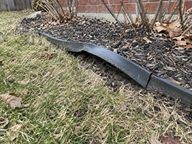
| Recut bed edges | Once beds are cleared | A clean edge keeps grass out all season |
| Mulch the beds | After weeding and edging | 5–8 cm (2–3 inches), kept off trunks and stems |
| First mow | When the grass reaches about 11 cm | Cut to about 7.5 cm, never more than a third at once |
The first round: hard surfaces, lawn and shrubs
Clear the big stuff first so you can see what winter did. Pick up branches, then sweep or blow off the driveway, walkway and patio.
While you’re there, look at the interlock. Heaved or sunken pavers, washed-out joints and the first weeds in the cracks are easier to deal with in spring than in July.
Our guides on weeds between pavers and why interlock sinks explain the fixes.
Watch out
Re-sanding joints has to wait for dry pavers and temperatures above 0°C. Alliance Gator warns that polymeric sand put down colder may never set.
On the lawn, a light rake is enough. Grey or pinkish matted patches are usually snow mould.
It looks bad, but Minnesota Extension says it rarely kills the grass. The Ontario turf manual (OMAFRA Publication 845) advises raking the matted areas in spring so they dry out.
Keep it gentle. Hard raking on soft ground damages the turf and the wet soil under it.
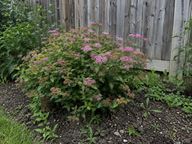
Shrubs are easier to prune before they leaf out, because you can see the branch structure. The Toronto Master Gardeners split it by bloom time:
- Shrubs that flower after mid-June get pruned in early spring.
- Shrubs that flower before mid-June, such as forsythia and lilac, wait until right after they bloom.
Take out dead, damaged and crossing branches first. To bring an old, overgrown shrub back, remove no more than a third of the oldest stems from the base each year.
Hedges have their own timing, which our guide on when to trim hedges in Ontario covers.
The second round: beds, edges and mulch
Once the warm stretch arrives, work through the beds in this order. The first three steps follow the City of Toronto’s pollinator advice.
- Leave leaf cover that’s under an inch thick, and gently lift off the excess before new growth comes up.
- Cut old perennial stems to about 30 cm rather than flush with the ground.
- Bundle the cut stems loosely and lean or hang them somewhere in the garden, so insects still inside can get out later.
- Replant any perennials the frost pushed out of the soil.
- Weed while the weeds are small and the soil is still damp, so they come out with the root.
- Recut the edges where the beds meet the lawn.
- Mulch the beds.
Weeding is mostly by hand now. Ontario’s cosmetic pesticide ban means products with 2,4-D or glyphosate can’t be used to kill weeds on lawns, gardens, patios or driveways, so hand-pulling and mulch do most of the work.
For mulch, the Toronto Master Gardeners suggest about 2–3 inches (5–8 cm). Our mulch guide works out how much you need for a given bed.
Watch out
Deeper mulch can do harm. Penn State Extension says more than 4 inches (10 cm) may harm tree roots, and mulch should never be piled against the trunk.
How do you get rid of spring yard waste in Markham?
Put it out for the City of Markham’s curbside pickup, which collects leaf and yard material every other week from spring to fall.
In 2026 the season runs from April 7 to October 30, so check the city’s calendar for next year’s start date. The rules that catch people out:
- Use kraft paper bags or open rigid containers such as a lidless garbage can. Plastic bags and cardboard boxes aren’t collected.
- Each bag, container or bundle has to weigh under 18 kg.
- Branches go in bundles under 1.2 m long, with no branch thicker than 15 cm, tied with string rather than wire.
- Keep the bags dry. Broken or overweight bags can’t be collected.
Other GTA cities have their own schedules, so check yours before you fill twenty bags.
Common spring cleanup mistakes
- Working the lawn while it’s soggy. Footprints and rake marks on wet ground compact the soil and leave thin patches for the rest of the season.
- Clearing every bed down to bare soil on the first warm Saturday in April, before the insects in the stems have left.
- Pruning lilacs and forsythia in early spring. You cut off this year’s flowers.
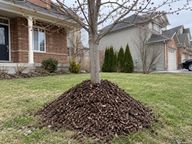
- Piling mulch up against tree trunks and shrub stems in a “volcano”. It holds moisture against the bark and invites rot.
- Mowing the first cut too short. The City of Guelph recommends a 7.5 cm (3 inch) cutting height and never taking off more than a third of the blade at once.
- Leaving weeds in the interlock joints until summer, by which time the roots are deep and the joint sand is loose.
When is it worth hiring a spring cleanup service?
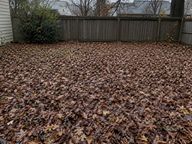
It’s worth it when the job is bigger than a couple of weekends. Think mature trees dropping a heavy load of branches and leaves, beds that have been let go for a season or two, or a lot of bagging and hauling.
Most of this list is fine to do yourself on a small lot with a rake and pruners. Some people would just rather spend April doing something else, and hiring it out means someone else watches the forecast and times the two rounds.
That’s the work we do on our spring cleanup visits: clearing, trimming shrubs, weeding, recutting bed edges and fresh mulch if you want it.
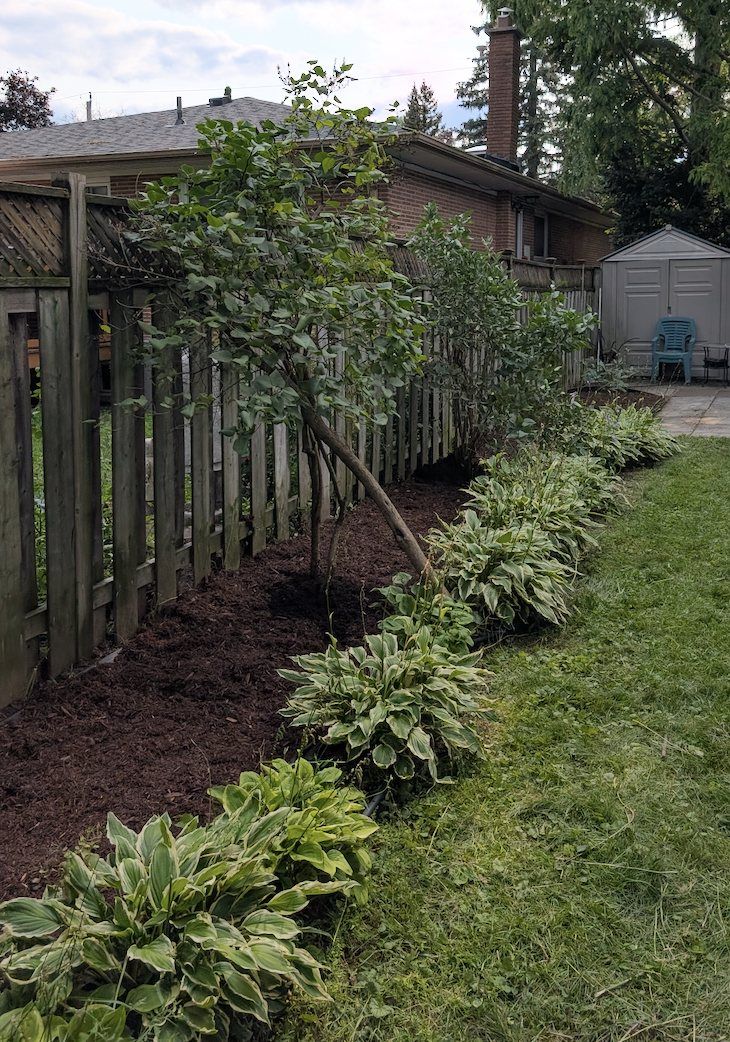
You can see a fence-line bed cleared of weeds and long grass and finished with fresh mulch in our weed treatment and clean-up project. When fall comes around, our fall cleanup checklist picks up where this one leaves off.
To get a free quote, call (437) 684-2535 or text us a few photos of the yard with your street or postal code.
Other questions people ask
What does a spring yard cleanup include?
It's the first pass over the yard after winter. Fallen branches and leftover leaves come off the lawn, matted grass gets a light rake, shrubs are pruned, beds are cleared of last year's stems and early weeds, edges are recut and the beds get fresh mulch. Hard surfaces are swept and checked for frost damage. In the GTA it usually starts in April and finishes once the weather has warmed up for good, often in late May.
When should you start spring yard cleanup in Ontario?
Start the parts that don't disturb soil or insects as soon as the snow is gone and the ground is firm: branches, driveways, walkways and pruning. Hold off on the beds until temperatures, including overnight lows, stay well above 10°C for at least 10 days. That's the City of Toronto's rule. Around Markham, average overnight lows don't pass 10°C until about the start of June, so taken strictly it means late May or June.
Does early yard cleanup hurt bees?
It can. Native bees and other helpful insects spend the winter inside hollow plant stems and under leaf litter, and stems cut too early often end up in the yard waste with insects still in them. The City of Toronto suggests waiting for steady temperatures above 10°C, then cutting stems to about 30 cm instead of to the ground, bundling the cut stems loosely in the garden so insects can still get out, and leaving leaf cover under an inch thick.
How do I clean up my backyard after winter?
Work from the hard surfaces in. Pick up branches and litter, clear the patio and paths, then rake the lawn lightly once it's firm. Prune shrubs before they leaf out. When it's warm enough, clear the beds, pull young weeds, recut the edges and mulch. Bag yard waste in kraft paper bags or open bins, never plastic, for Markham's curbside pickup.
How much does a spring cleanup cost?
We haven't found a reliable published price survey for the GTA, so we'd rather not quote a range. The price follows the time it takes: the size of the yard, how many trees drop debris on it, how long the beds have gone without attention, how much needs bagging and hauling, and extras such as pruning or mulch. We give free quotes after seeing the yard.
Sources
- City of Toronto: Help native bees and pollinators
- Toronto Master Gardeners: Spring clean-up guide
- City of Markham: Yard material collection
- City of Guelph: Lawn care
- University of Minnesota Extension (Growing Green column, Pope County Tribune): Spring lawn care, what to do now and what to skip
- OMAFRA: Integrated Pest Management for Turf, Publication 845 (snow moulds)
- Environment and Climate Change Canada: 1981–2010 climate normals, Toronto Buttonville A, mean daily minimum temperature
- Penn State Extension: Mulching landscape trees
- Government of Ontario: Pesticides (home lawns and gardens)
- Alliance Gator: Gator jointing material FAQ
Related guides and service
- Fall cleanup checklist: what to do before winter A fall cleanup in Ontario means getting the leaves off the lawn and hard surfaces, clearing out the beds, cutting back only diseased or collapsed plants, mowing one last time to about 5 cm (2 inches), and shutting off…
- How much mulch do you need? A calculator, the right depth and when to mulch For most Ontario garden beds, spread mulch 2–3 inches (5–7.5 cm) deep, and no more than 4 inches.
- Garden bed edging: interlock, steel, plastic or a spade-cut edge, and which lasts in Ontario For garden bed edging in Ontario, steel lasts longest and an interlock border on a gravel base holds up well.
- When to prune hydrangeas and other shrubs in Ontario: lilacs, spirea, forsythia and more When to prune hydrangeas and other shrubs in Ontario depends on when they flower.