When to trim hedges and shrubs in Ontario
Short answer
In Ontario, trim cedar, juniper and yew hedges in early spring before new growth starts, or around mid-June once the first flush of growth is done, with a light touch-up in midsummer. Prune deciduous hedges hard in March or early April while they're dormant. Trim lilac and other spring bloomers right after flowering. Skip heavy cuts after midsummer, and check for nests from April to August.
Key numbers
- Cedar hedges
- Early spring, or mid-June after the first flush
- Heavy pruning, deciduous hedges
- March or early April
- Last real shaping
- End of July
- GTA nesting period (Toronto north)
- Early April to late August
- Renovation cut height
- 4 to 6 inches (10 to 15 cm)
In this guide
For hedge trimming in Ontario, cut cedars in early spring or around mid-June, deciduous hedges like privet in March or early April, and lilac right after it flowers. Finish any real shaping by the end of July, because growth pushed out later may not harden before winter.
Most hedge trouble in GTA yards comes from getting that timing, or the shape, wrong. A cedar hedge sheared hard in September is more likely to brown over the winter. A lilac cut back in April loses that year’s flowers.
A privet hedge kept wider at the top than at the bottom shades its own base, and the lower branches thin out.
If you’d rather hand it off, our hedge and bush trimming service covers this work around Markham and nearby.
What’s the best time to trim hedges in Ontario?
In Ontario, the plant decides the month. Cedar and other evergreens get trimmed in early spring or after their first flush of growth in June.
Deciduous hedges get their heavy pruning in March or early April, and flowering shrubs get trimmed around their bloom. Here’s how that works out in a typical GTA year:
Scroll sideways to see the whole table.
| Plant type | Main trim | Light touch-up | Avoid |
|---|---|---|---|
| Needled evergreens: eastern white cedar (arborvitae), juniper, yew | Late March to April, before new growth, or mid-June after the first flush | Midsummer, light only | Heavy cuts after midsummer and in fall |
| Deciduous hedges: privet, alpine currant | March to early April, while dormant | After the spring flush in May, again in July if needed | Pruning in August and September |
| Spring-flowering shrubs: lilac, forsythia | Right after the flowers fade (late spring) | None needed | Pruning in winter or early spring |
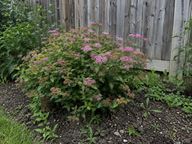
| Summer-flowering shrubs: potentilla, Japanese spirea | Late winter or early spring | None needed | Pruning in late summer |
Most of that timing comes from Iowa State University Extension, which writes for a cold-winter region. It puts juniper and yew in late March or early April before new growth, and heavy pruning of deciduous hedges late in the dormant season.
It also says to prune spring bloomers right after flowering and summer bloomers in late winter or early spring. The University of Delaware Extension names early spring as the best time for arborvitae and juniper.
Canadale Nurseries in St. Thomas, Ontario puts the evergreen shaping window after the first flush of new growth, around mid-June.
For flowering shrubs grown on their own rather than as a hedge, including the different hydrangeas, see when to prune shrubs in Ontario.
When should you trim a cedar hedge?
Trim a cedar hedge in early spring, or wait until the spring growth has come out, around mid-June in the GTA. Both work.
The June trim has one advantage: the hedge has already put on its new growth, so you can cut it back to a clean line and it stays tidy for most of the summer.
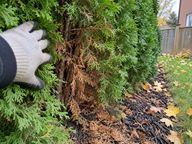
Early spring is also when you clean up winter damage. Canadale suggests lightly trimming cedars and junipers with hedge shears in early spring to remove winter-killed tips.
Good to know
Check the south, southwest and west faces first, plus anything along the driveway. University of Wisconsin-Madison Extension notes that winter burn shows up most on foliage facing those directions, and that plants near salted roads, driveways and sidewalks are more at risk.
If you’re not sure whether the brown is winter burn, salt or normal needle drop, our guide on why a cedar hedge turns brown goes through each cause.
A light second pass in midsummer is fine if fast growers have gone shaggy. Iowa State says formal hedges need shearing 2 to 4 times a season, though plenty of homeowners are happy with one main trim and one touch-up.
Why shouldn’t you trim hedges in the fall?
Late pruning can push out new growth that doesn’t have time to harden before the cold. Iowa State advises against pruning deciduous shrubs in late summer, since growth triggered in August or early September may not harden off before winter.
It also advises against pruning evergreen shrubs in fall, which leaves them more open to winter injury. For hedges, it says to avoid extensive pruning after midsummer.
In Markham and the rest of the GTA, that means finishing any real shaping by the end of July. From then until the leaves drop, only take out dead, broken or diseased branches.
If you’re tidying the yard in October anyway, our fall cleanup checklist covers what’s worth doing before the snow, and the spring cleanup checklist picks up from there.
Can you trim a hedge during bird nesting season?
You can, but look for nests first. Dense cedar and privet hedges are popular nesting spots.
Environment and Climate Change Canada’s general nesting calendar puts the nesting period at late March to late August along Lake Erie (zone C1), and early April to late August from Toronto northward (zone C2). It’s a general guide; local nesting can start earlier or run later.
Watch out
The federal Migratory Birds Regulations make it illegal to damage, destroy or disturb the nest of a migratory bird while it holds a bird or a viable egg. Clearing vegetation is one of the activities ECCC names as a risk to nests.
A main trim in March or early April, before nesting is in full swing, sidesteps the problem for deciduous hedges.
Cedars trimmed in June get cut in the middle of the peak nesting weeks. Before you start:
- Walk the full length of the hedge, on both sides if you can.
- Look into the hedge, not just at the outside face, and watch for birds flying in and out.
- If you find an active nest, leave that section alone until the young have left, and trim the rest.
How far back can you cut a hedge?
On cedars, cut back only as far as the green growth. Iowa State says arborvitae can sprout from bare stems, but slowly, and it may look poor for five or more years. Junipers can’t start new growth from bare branches at all.
Either way, a cut into bare brown branches can leave a gap that stays for years, and Iowa State notes that replacing an overgrown evergreen is often the better choice. Yew is the exception: the University of Delaware says it handles exceptionally severe pruning into older wood.
Deciduous shrubs are far more forgiving. For an overgrown deciduous shrub or informal hedge, Iowa State describes two ways to bring it back:
- Rejuvenation: in March or early April, remove about a third of the oldest stems at ground level, then half of the remaining old stems the next year, and the rest in year three.
- Renovation: cut every stem down to 4 to 6 inches (10 to 15 cm) above the ground in March or early April, then thin the new shoots the following late winter.
Renovation works on shrubs like spirea, ninebark, dogwood and lilac. Ninebark and forsythia won’t flower the next spring, and lilacs can take 3 to 5 years to bloom again.
Common hedge trimming mistakes
These are the ones that do damage you can’t easily undo:
- Making the top wider than the bottom. Iowa State says a hedge should be narrower at the top so the lower branches get light, and the slope cuts down on snow building up on top, which can break branches in a GTA winter.
- Cutting a cedar back past the green to “reset” it. The bare patch usually stays.
- Taking a tall cedar hedge down a lot in one go. If the cut lands in bare wood, the top stays brown and patchy for years, so lower it a little each season and keep the cuts in green growth.
- Trimming lilac or forsythia in early spring and wondering why there are no flowers.
- Shaping in September because there’s finally time. That late cut is what leaves a hedge open to winter damage.
- Leaving the clippings in the beds. Rake them out so they don’t mat down over low plants, and top up the beds with fresh mulch if they look thin (our mulch guide covers how much).
When is it worth calling a pro?
Once the top of the hedge is above head height, it’s usually worth getting help. Working off a ladder with a running trimmer is the risky part, and getting a long hedge level by eye from up there takes practice.
A small hedge you can reach from the ground is a fine homeowner job with decent shears or an electric trimmer.
A hedge that’s been left for several years and needs bringing back in stages is another good reason, and so is not knowing what the plants are. Cutting at the wrong time of year can cost you a season of flowers or growth.
Hedge and bush trimming is part of what we do. We can look at an overgrown hedge and talk through what trimming can and can’t fix. If you’d rather plan beds that need less of this work, see low-maintenance garden beds.
For a quote, call (437) 684-2535 or text us a photo of the hedge. Our hedge trimming service page has more on how the job works.
Other questions people ask
When's the best time to trim your hedge?
It depends on the plant. Cedar, juniper and yew hedges are best trimmed in early spring before new growth, or after the first flush of growth around mid-June. Deciduous hedges like privet take their heavy pruning in March or early April. Spring-flowering shrubs such as lilac should be trimmed right after they bloom, or you cut off next year's flowers.
Do cedars grow back after cutting?
Cedars grow back from cuts made in the green, leafy part of the branch. Cuts into old brown wood with no foliage left on it fill in slowly, if at all. Iowa State University Extension says arborvitae (the plant we call cedar) can sprout from bare stems, but it may look poor for five or more years and some never fill in. Keep each trim inside the green and cedars will stay full.
Is October too late to trim hedges in Ontario?
For a shaping trim, yes. Iowa State University Extension advises against pruning evergreen shrubs in fall because it leaves them more open to winter injury, and against pruning deciduous shrubs in late summer because new shoots may not harden before the cold. In October, stick to removing dead or broken branches and leave the real trim for spring.
Can you trim hedges in winter?
Deciduous hedges can be pruned in late winter, in March or early April before the buds open, and that's the best time for heavy cutting. Evergreens like cedar are better left until early spring, when you can also clip off any tips the winter browned. Dead or broken branches on any hedge can come out at any time of year.
When should I cut my hedge to avoid nesting birds?
Do the main trim before nesting starts, in March or very early April. Environment and Climate Change Canada's general nesting period for the GTA runs from early April to late August. If you trim a cedar in June or a deciduous hedge in summer, look through it first and leave any section with an active nest alone until the young have gone.
Sources
- Iowa State University Extension: The proper time to prune trees and shrubs
- Iowa State University Extension: How to prune formal hedges
- Iowa State University Extension: Pruning large, overgrown shrubs
- University of Delaware Cooperative Extension: Pruning evergreens
- University of Wisconsin-Madison Extension: Winter burn
- Canadale Nurseries (St. Thomas, Ontario): Pruning 101
- Environment and Climate Change Canada: Nesting periods
- Environment and Climate Change Canada: Guidelines to reduce risk to migratory birds
Related guides and service
- Why your cedar hedge is turning brown, and whether it will come back Where and when the brown shows up tells you the cause. Inner foliage browning in September and October is normal fall needle drop.
- When to prune hydrangeas and other shrubs in Ontario: lilacs, spirea, forsythia and more When to prune hydrangeas and other shrubs in Ontario depends on when they flower.
- Fall cleanup checklist: what to do before winter A fall cleanup in Ontario means getting the leaves off the lawn and hard surfaces, clearing out the beds, cutting back only diseased or collapsed plants, mowing one last time to about 5 cm (2 inches), and shutting off…
- Spring cleanup checklist for Ontario yards Do a spring yard cleanup in Ontario in two rounds. Once the snow is gone and the ground is firm, usually in April in the GTA, pick up branches, sweep hard surfaces, rake the lawn lightly and prune shrubs.