When to prune hydrangeas and other shrubs in Ontario: lilacs, spirea, forsythia and more
Short answer
When to prune hydrangeas and other shrubs in Ontario depends on when they flower. Lilac, forsythia and bridal wreath spirea bloom on last year's wood, so cut them right after flowering. Bigleaf and oakleaf hydrangeas also bloom on old wood: only cut out dead stems in spring. Panicle and smooth hydrangeas, Japanese spirea, potentilla and rose of Sharon bloom on new wood, so prune them around March in the GTA. Skip fall pruning.
Key numbers
- Spring or summer bloomer
- Flowers before mid-June: usually old wood
- Late-winter pruning in the GTA
- About March to early April
- Most to remove at one time
- About a third of the largest stems
- Bigleaf hydrangea cut
- A quarter inch (6 mm) above live buds
- Lilac cut to the ground
- May not bloom for 3–5 years
In this guide
Knowing when to prune hydrangeas, lilacs or any other flowering shrub comes down to one question: does it flower on last year’s wood or on this year’s growth? Lilacs and forsythia set next year’s buds soon after they bloom, so you prune them right after flowering. Panicle hydrangeas, Japanese spirea and potentilla flower on new shoots, so they get cut in late winter or early spring.
Bigleaf hydrangeas need almost no pruning. Get it wrong and the shrub lives, but you lose a year of flowers.
A lot of people reach for the shears in October during the fall cleanup, because the garden looks tired. For almost every flowering shrub, that’s the wrong month.
We trim bushes and shrubs around Markham as part of our hedge and bush trimming work. This guide is the shrub-by-shrub version, so you can do it yourself or know what to ask for.
Which shrubs bloom on old wood and which on new wood?
Shrubs that flower before mid-June mostly bloom on old wood, and shrubs that flower in summer mostly bloom on new wood. Penn State Extension says spring bloomers “set next year’s flower buds shortly after they finish blooming this year”, while summer bloomers flower on the current season’s growth.
Iowa State University Extension and the University of Wisconsin-Madison Extension sort shrubs the same way, and so does Canadale Nurseries in St. Thomas, Ontario.
“Late winter or early spring” means about March to early April around Markham and Toronto. That’s the window Iowa State, writing for a similar cold-winter climate, gives for heavy pruning of overgrown shrubs.
Here’s how common GTA shrubs sort out.
Scroll sideways to see the whole table.
| Shrub | Flowers on | When to prune in the GTA | What to cut |
|---|---|---|---|
| Lilac | Old wood | Right after flowering, late spring | Spent flowers, plus a few of the oldest stems at the base |
| Forsythia | Old wood | Right after flowering, spring | Oldest stems at ground level |
| Bridal wreath and Vanhoutte spirea | Old wood | Right after flowering | Thin out old stems |
| Weigela, mock orange, ninebark | Old wood | Right after flowering | Thin out old stems |
| Bigleaf hydrangea (mophead, lacecap) | Old wood (rebloomers on both) | Spring, once new growth appears | Dead stems only, just above the first live buds |
| Oakleaf hydrangea | Old wood | Spring, once new growth starts | Dead or damaged stems; light thinning if needed |
| Panicle hydrangea (Limelight, PeeGee) | New wood | Late winter to early spring | Up to a third, or harder for bigger flowers |
| Smooth hydrangea (Annabelle) | New wood | Late winter to early spring | Can go down close to the ground |
| Japanese and bumalda spirea | New wood | Late winter to early spring | Last year’s stems back to a good bud |
| Potentilla | New wood | Late winter to early spring | Oldest stems at the base |
| Rose of Sharon | New wood | Spring | Can be cut back heavily |
| Burning bush | Grown for leaves | Late winter, before growth starts | Shape and thin |
Where the rows come from: Penn State Extension covers most of these shrubs, and Iowa State and Wisconsin add potentilla, Japanese spirea and burning bush. The hydrangea rows follow Penn State and the University of New Hampshire Extension. The Morton Arboretum says rose of Sharon flowers on new growth and should be pruned back heavily in spring.
When should you prune hydrangeas in Ontario?
In Ontario, prune panicle and smooth hydrangeas in late winter or early spring, and leave bigleaf and oakleaf hydrangeas alone apart from cutting out dead stems in spring.
The trouble is that all of them are sold as “hydrangea”, so check the tag or the leaves before you cut.
Panicle hydrangeas
Panicle hydrangeas (Limelight, Quick Fire, the old PeeGee) have cone-shaped flower heads. Proven Winners suggests taking off up to a third of a new-wood hydrangea.
Canadale recommends pruning panicle types hard in early spring for large flowers later in summer. Penn State says both panicle and smooth hydrangeas can be cut to the ground in late winter or very early spring and still flower.
Smooth hydrangeas
Smooth hydrangeas like Annabelle have big round white heads. They flower on the current year’s growth, so a hard cut in March costs you nothing.
Bigleaf hydrangeas
Bigleaf hydrangeas (the blue or pink mopheads and lacecaps) are the ones people ruin. Penn State says their buds for next summer form after this year’s flowers finish, so a fall cut leaves few or no flowers.
A cold winter can also kill them to the ground, and then there are no blooms that summer either.
The University of New Hampshire Extension’s method for bigleaf types goes like this:
- Wait until new growth appears in spring.
- Find the first set of live buds on each stem, working down from the tip.
- Cut a quarter inch (about 6 mm) above those buds.
- Cut stems that are dead all the way down flush at the base.
Good to know
Not sure which stems are alive? Per UNH, live stems are green inside, and once spring growth starts the live ones are easy to spot. That’s the main reason to wait until spring instead of cutting in fall.
Don’t plan on a shaping cut after they bloom either. Proven Winners points out that old-wood hydrangeas finish flowering so late that there isn’t time to regrow and set next year’s buds.
Oakleaf and reblooming hydrangeas
Oakleaf hydrangeas also flower on old wood. UNH says to remove only dead or damaged branches in spring, and to thin stems or bring the height down once new growth has started, if it needs it at all.
Reblooming bigleaf types like Endless Summer flower on old and new wood. Proven Winners says to prune them like the old-wood types. Canadale suggests a trim in June after the first flush of blooms.
When should you prune lilacs?
Prune lilacs right after the flowers fade in late spring, before next year’s buds start to form. Penn State lists lilac among the shrubs that set next year’s flower buds shortly after blooming, so a cut in late summer, fall or early spring takes those flowers with it.
Cutting off the spent flower clusters is worth doing even on a lilac that’s the right size. Canadale says removing spent flowers encourages more vigorous blooms the next season.
An old lilac can end up all bare trunks, with the flowers out of reach. Take out the oldest, thickest stems at ground level.
Penn State says a healthy lilac can have all of them removed at once. A struggling one can have the job spread over three years, a third of the overgrown stems each year. Our guide to trimming hedges in Ontario has Iowa State’s three-year rejuvenation plan.
Watch out
Iowa State warns that a lilac cut right down to the ground may not bloom for 3–5 years. Spreading the job over three years, a third of the old stems at a time, leaves the rest standing to flower in the meantime.
When should you prune spirea and forsythia?
It depends on the spirea. The spring-blooming kinds, like bridal wreath and Vanhoutte spirea with their arching white sprays in spring, flower on old wood and get pruned right after flowering.
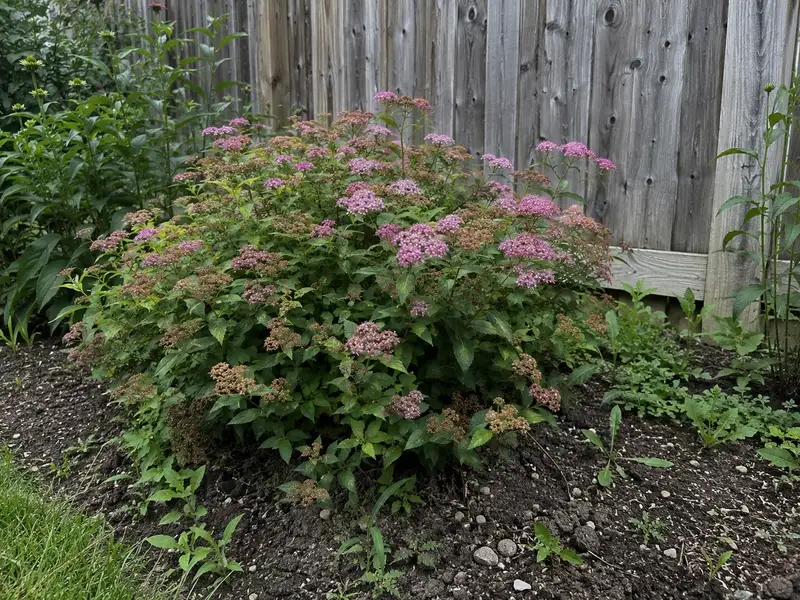
Japanese and bumalda spireas, the low pink-flowered mounds in so many GTA front beds, bloom in summer on new wood. Penn State says to prune them in late winter or very early spring.
Forsythia is a spring bloomer, one of the first yellow shrubs out in the GTA. Prune it right after it flowers.
Cut it in fall or winter and you take off the flower buds that were already set. You get green leaves and few flowers that spring.
Can you cut back hydrangeas and other flowering shrubs in the fall?
For the most part, no. Penn State says late summer and fall are poor times to prune, because pruning stimulates new growth.
Iowa State adds that late growth may not harden off before winter, and advises against pruning evergreen shrubs in fall. The UNH Extension says fall pruning puts plants at greater risk of winter injury and can cut the number of flowers the next summer.
There are two exceptions:
- A dead or broken branch has no flower buds to lose, so you can cut it out when you notice it.
- Proven Winners says panicle and smooth hydrangeas can be cut back once they’ve gone dormant in late fall, for example if you want a tidier look in winter or get heavy snow. UNH still suggests waiting until spring for all hydrangeas.
So in an October cleanup, leave the flowering shrubs standing. Our fall cleanup checklist covers what is worth doing now, and the spring cleanup checklist is where the new-wood shrubs get their cut.
What are the most common shrub pruning mistakes?
Most of them come down to cutting at the wrong time or cutting too much.
- Shearing every shrub into a ball or box. Penn State says shearing all the stems to the same height destroys the shrub’s natural shape. Thinning whole stems at the base keeps it looking like itself.
- Trying to keep a hydrangea small by cutting it back. Proven Winners says it will just grow back to its original size or larger. If it’s too big for the spot, it needs moving.
- Taking off too much in one go. Penn State and Wisconsin both put the limit at about a third of the largest stems at one time.
- Pruning in August or September because there’s finally time. Iowa State says growth pushed out that late may not harden off before winter.
- Leaving the clippings in the beds. Rake them out, then top up the mulch if it’s thin. Our mulch guide covers how much.
When is it worth calling someone?
A few shrubs you can reach from the ground are a fine weekend job with sharp bypass pruners and loppers.
Help is worth it when you don’t know what the shrubs are, when a row of old lilacs or spireas needs bringing back over several years, or when the job is mixed in with hedges that need a ladder.
We work across Markham and nearby towns like Richmond Hill. We trim shrubs and bushes in garden beds back off paths, windows and siding, rake up the clippings, and can tell you which ones are better left until spring.
Call (437) 684-2535 or text us a photo of the shrubs. Our bush and hedge trimming page explains how the job works.
Other questions people ask
When should I cut back hydrangeas?
It depends on the type. Panicle hydrangeas like Limelight and smooth ones like Annabelle flower on new growth, so cut them back in late winter or early spring, around March in the GTA. Bigleaf (mophead and lacecap) and oakleaf hydrangeas flower on old wood. Leave them alone except for dead stems, which you can cut out in spring once new growth shows which stems are alive.
Should I cut back my Annabelle hydrangeas in the fall?
You can, but there's no need. Annabelle is a smooth hydrangea that flowers on the current year's growth, and Penn State Extension says it can be cut to the ground in late winter or very early spring and still bloom well. Proven Winners says new-wood types can also be cut once they've gone dormant in late fall. Leaving the dried heads on over winter does no harm.
What happens if you don't prune hydrangeas?
Usually nothing bad. Proven Winners says no hydrangea needs pruning to grow and bloom well, and its rule is simple: if in doubt, don't prune. Panicle and smooth hydrangeas keep blooming without a cut, but they get bigger. Canadale Nurseries in Ontario recommends a hard cut on panicle types in early spring for large flowers later in summer.
What are the common mistakes when pruning hydrangeas?
The big one is cutting a bigleaf hydrangea back in fall or early spring, which removes the buds that would have flowered. Another is pruning to make a hydrangea shorter. Proven Winners notes it just grows back to the same size or bigger. Shearing every stem to one height is a third, because Penn State Extension says it destroys the shrub's natural shape.
How do I care for my hydrangea in fall?
Mostly, leave it be. Don't cut bigleaf hydrangeas, since Penn State says fall pruning leaves few or no flowers the next summer. You can leave the dried flower heads on all winter and tidy them in spring, as Proven Winners suggests. UNH Extension's advice is to wait until spring to prune all hydrangeas, when it's easier to see which stems are alive.
Sources
- Penn State Extension: Pruning flowering shrubs
- Penn State Extension: How and when to prune flowering shrubs
- Penn State Extension: When to prune which hydrangea species
- University of New Hampshire Extension: Should I prune my hydrangeas now or wait until spring?
- University of New Hampshire Extension: Pruning hydrangeas (fact sheet)
- University of Wisconsin-Madison Extension: Pruning deciduous shrubs
- Iowa State University Extension: The proper time to prune trees and shrubs
- Iowa State University Extension: Pruning large, overgrown shrubs
- The Morton Arboretum: Rose of Sharon
- Proven Winners: How to prune your hydrangea
- Canadale Nurseries (St. Thomas, Ontario): Pruning 101
Related guides and service
- When to trim hedges and shrubs in Ontario In Ontario, trim cedar, juniper and yew hedges in early spring before new growth starts, or around mid-June once the first flush of growth is done, with a light touch-up in midsummer.
- Why your cedar hedge is turning brown, and whether it will come back Where and when the brown shows up tells you the cause. Inner foliage browning in September and October is normal fall needle drop.
- Fall cleanup checklist: what to do before winter A fall cleanup in Ontario means getting the leaves off the lawn and hard surfaces, clearing out the beds, cutting back only diseased or collapsed plants, mowing one last time to about 5 cm (2 inches), and shutting off…
- Spring cleanup checklist for Ontario yards Do a spring yard cleanup in Ontario in two rounds. Once the snow is gone and the ground is firm, usually in April in the GTA, pick up branches, sweep hard surfaces, rake the lawn lightly and prune shrubs.